What redevelopment delays say about Japan’s property cycle
As redevelopment delays spread from regional cities into central Tokyo, the message is becoming clearer: rising construction costs are no longer just a margin issue—they are beginning to reshape supply, timing and value across Japan’s property market.

Redevelopment delays are no longer just a regional story in Japan.
For a while, rising construction costs were mainly seen as a problem for secondary cities, where lower rents and weaker pricing power made it harder for projects to absorb higher material and labour costs. Now that pressure is reaching central Tokyo as well. That shift matters, because once even prime locations begin to pause, redesign or delay major schemes, it starts to say something broader about the property cycle.
The immediate issue is simple enough. Construction costs have risen sharply, driven by more expensive materials, labour shortages and tighter working rules in Japan’s building industry. More recently, energy and petroleum-related cost risks linked to conflict in the Middle East have added another layer of pressure. The result is that developers are increasingly having to revisit assumptions that looked workable only a few years ago.
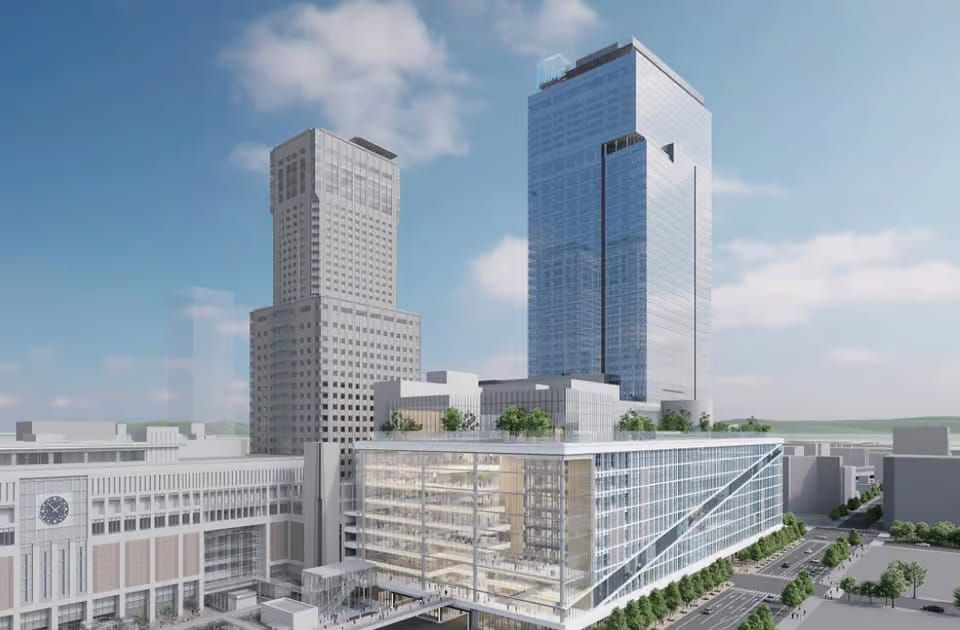
What makes the current moment more interesting is where this is happening. Delays and revisions have already affected projects in places such as Nagoya, Gifu, Hakata and Sapporo. But the same pressure is now being seen in central Tokyo, including the redevelopment plans around the Grand Prince Hotel Shin Takanawa and the Imperial Hotel Tokyo. When that kind of caution reaches some of the country’s most prestigious urban locations, it suggests the issue is not confined to weaker markets.
For investors, this is less about any one project than about what delayed redevelopment tends to mean more generally.
One implication is that future supply may arrive more slowly than expected. In markets where investors are already counting on new hotels, offices, mixed-use districts or upgraded residential stock, delays can extend the life—and sometimes the value—of existing assets. If replacement supply is pushed back, current high-quality stock can remain competitive for longer.
That also strengthens the case for turnkey-ready property.
In a market where new projects may be delayed, redesigned or repriced, there is added value in homes, apartments and buildings that are ready to use now. Buyers do not just gain certainty on timing. They also avoid construction risk, cost escalation and the possibility that a planned future product arrives later, smaller or more expensive than expected. In some cases, that can make existing well-finished stock look more compelling relative to pre-construction or heavy-renovation opportunities than it would in a lower-cost build environment.
That does not mean redevelopment delays are universally bullish. They are also a sign of strain. If fewer projects move ahead, some districts may see slower renewal, less ambitious design or reduced long-term supply response. Cost inflation can support existing assets in the short term, but if it becomes too severe it can also limit the broader dynamism of the market.
Still, the direction of travel is worth noting. Japan’s property cycle is no longer being shaped only by demand, rates and tourism. It is increasingly being shaped by what is actually feasible to build, at what cost, and on what timetable.
That makes this more than a construction story. It is a reminder that in the current cycle, scarcity may be reinforced not only by demand for property, but by the growing difficulty of delivering new supply. For investors, that makes readiness, build quality and certainty of use more valuable than before.