Japan’s Construction Stress Is Becoming A Property-Market Signal
Rising bankruptcies among construction and small firms are not a crisis story, but they are a useful reminder that Japan’s property markets are being shaped as much by buildability, cost control and operational resilience as by buyer demand.


Japan’s property market is often discussed through the lens of demand. Prices, foreign buyers, tourism, interest rates and the weak yen tend to receive most of the attention but the supply side increasingly deserves just as much focus.
New bankruptcy data from Tokyo Shoko Research and Teikoku Databank points to a gradual rise in corporate stress across Japan, particularly among smaller companies and firms exposed to higher materials, labour and financing costs. This is not a systemic crisis story, and it should not be read as a sign that Japan’s property market is suddenly weakening. It is better understood as a reminder that the ability to build, renovate, operate and maintain real estate is becoming more important.
According to Tokyo Shoko Research, Japan recorded 5,346 corporate bankruptcies in the first half of 2026, up 7.1% year on year. The total exceeded 5,000 for the first half of a year for the first time since 2014. Teikoku Databank recorded a similar pattern, with 5,335 bankruptcies, up 6.6%, and total liabilities of around ¥724.7 billion, up 6.9%.
The broad increase matters, but the construction data is the most relevant part for property investors. Tokyo Shoko Research said construction bankruptcies reached 1,026 in the first half, up 5.8%, exceeding 1,000 for the first half of a year for the first time since 2014. Teikoku Databank’s own industry breakdown showed construction bankruptcies rising to 1,043, also up 5.8%, while its separate analysis of inflation-related bankruptcies found that construction accounted for 151 such cases, the highest among the industries surveyed.
The reason this matters is straightforward because property value is not created by demand alone, it is also created by execution. A buyer can believe in a resort, a city, a neighbourhood or a long-term tourism story, but if construction costs are unstable, contractors are under pressure, skilled labour is scarce and smaller subcontractors are financially fragile, the practical risk profile changes. Timelines become harder to rely on, renovation budgets become less predictable, development feasibility becomes more sensitive to small changes in cost. Even basic maintenance can become more expensive or slower to arrange.
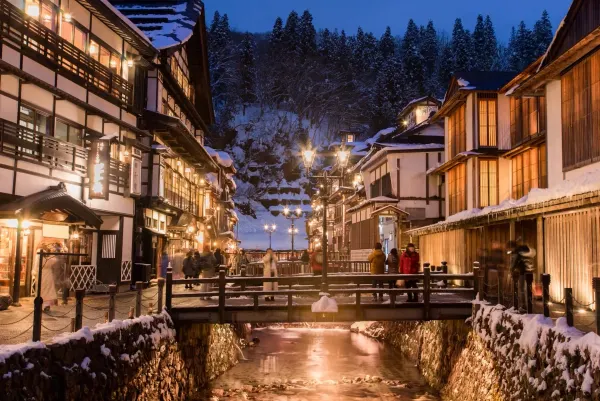
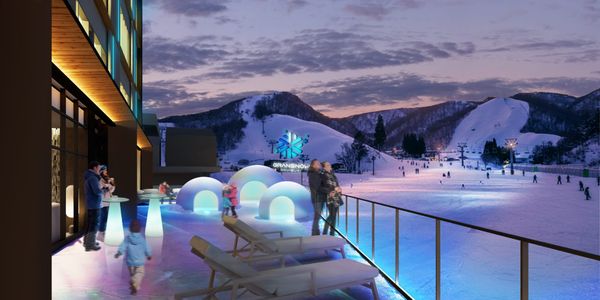
This is especially relevant in Japan’s resort and lifestyle markets. Places such as Niseko, Hakuba, Furano, Karuizawa and other regional destinations often rely on a relatively limited pool of reliable builders, tradespeople, project managers and maintenance operators. When those businesses are busy, ageing, short-staffed or financially stretched, the effect can be felt quickly. A project in central Tokyo may have more contractor options, whereas a renovation in a mountain village, snowy resort town or rural second-home area may not.
That does not mean development stops, strong projects can still proceed, and well-capitalised developers may even benefit from being able to navigate a more difficult environment. But it does mean the gap between credible projects and weaker ones can widen. Sites with clear permissions, realistic budgets, trusted construction partners and careful phasing become more valuable. Finished or nearly finished stock may also command more attention from buyers who want to avoid the uncertainty of building from scratch.
The bankruptcy data also says something about inflation as Teikoku Databank reported 556 inflation-related bankruptcies in the first half of 2026, up 23.8% year on year and the highest half-year total since the survey began in 2018. The company said the main pressures included raw materials, labour costs and energy, with construction particularly exposed to the long-running effects of higher steel, timber and concrete costs, shortage of skilled workers and rising outsourcing expenses.
For property investors, this reinforces a point that is easy to overlook. Inflation does not only affect household spending or central-bank policy, it also changes what can be built, how quickly it can be built and at what price. In markets where land values have already risen and buyers are still looking for quality product, construction inflation can restrict future supply even when demand remains healthy. That can support values for existing high-quality stock, but it can also make new projects harder to deliver.
There is a tenant and operator angle too because Teikoku Databank’s data shows that many bankruptcies remain concentrated among smaller firms. In resort markets, those small businesses are not peripheral. They include restaurants, cafés, property managers, transport providers, cleaning companies, ski and outdoor operators, and specialist trades. These are the businesses that make a destination work in practice. A resort property market can look strong on paper, but the visitor and owner experience still depends heavily on the health of the local operating base.
The correct conclusion is therefore not overly negative because it is clear from the macro data that Japan is not facing a property-market collapse just because bankruptcies are rising. In some ways, the current environment may even favour stronger operators, better-capitalised developers and higher-quality existing assets. But the data does make one point clearly: execution risk is becoming more important.
For Uchi Insights readers, that is the useful takeaway as demand still matters. So do tourism, currency, interest rates and lifestyle appeal. But in today’s Japan, the ability to actually deliver, staff, maintain and operate real estate may be just as important as the demand story that first attracted buyers to the market.
A more selective market is not necessarily a weaker one, rather it is simply one where buildability, resilience and operational quality matter more than before.
Sources
Tokyo Shoko Research, 2026 first-half nationwide corporate bankruptcy data.
Teikoku Databank, 2026 first-half corporate bankruptcy report.
Teikoku Databank, 2026 first-half inflation-related bankruptcy report.