Japan’s Ski Hotel Map Reveals Two Different Resort Economies
New accommodation research reveals large differences in hotel supply around Japan’s ski areas. Alongside Okuibuki’s planned 54-room hotel, the findings raise questions about how destinations turn day visitors into overnight guests.

Japan’s ski areas can look similar on a map while supporting very different accommodation economies. Some sit within substantial concentrations of hotels and other lodging, whereas others draw heavily on visitors who arrive for the day or stay further away, creating different opportunities and constraints for property development.
A HotelBank analysis using MetroEngine data, published on 30 August and updated on 2 September, examined accommodation within three kilometres of 30 selected ski areas. It identified 40,419 rooms across 2,935 facilities, with the areas around Hakuba Happo-one, Niseko Grand Hirafu and Tsugaike together accounting for 39.3% of the rooms in that sample. Eleven locations had fewer than 300 rooms within the same radius.
The boundaries need careful reading, because these are circles around selected ski areas rather than complete resort regions or measures of practical travel time. Kawaba illustrates the difference: the analysis found no rooms within three kilometres but 2,144 within ten kilometres, showing how a narrow search boundary can conceal a wider accommodation catchment. The database also has missing room-count information for some facilities.
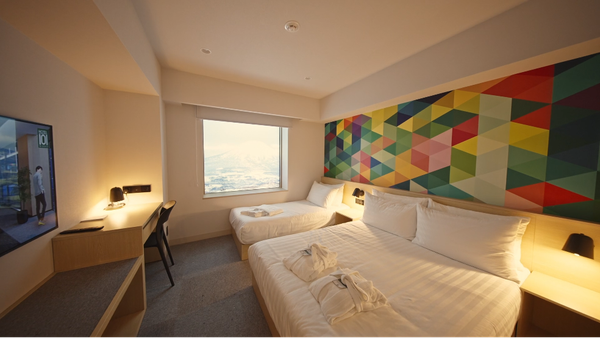
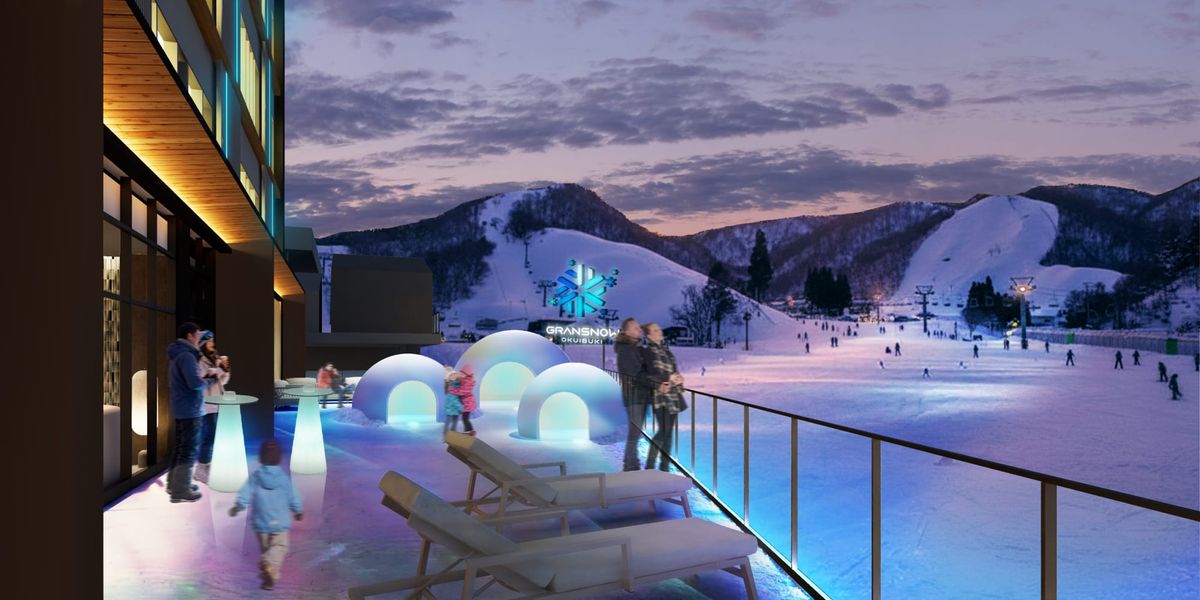
A separate development announcement shows how an operator might seek to change its own accommodation model. Okuibuki Kanko said in May that it plans a 54-room hotel at Grand Snow Okuibuki in Shiga Prefecture, with an investment of ¥2.42 billion and opening targeted for December 2027. The proposed hotel is intended to help convert day visits into overnight stays, with its principal operating period planned around approximately 150 winter days.
We hope you are enjoying this free article and please continue reading on below. Uchi Insights provides the latest market news from across Japan as well as global mountain resorts, most of it for free.
But we'd love a little love!
If you want the latest data and deep-dive reports, you can access premium Uchi Insights covering pricing, sales, supply and market trends across Japan’s leading resort real estate destinations.
Twelve months of Premium access costs US$200—roughly the price of a good pair of gloves for that Japanese powder snow.
If you are buying, selling, investing or simply trying to understand where Japan’s resort property markets are moving, make sure you have the same data and analysis at your fingertips.
Don’t be the one wondering what everyone else knows.
The project offers a useful counterpoint to discussion of established international resort villages. Where a destination already has extensive lodging, a new hotel must distinguish itself within a developed market; where nearby supply is limited, it may first need to establish why visitors should change an existing day-trip habit.
That distinction affects more than room design. An overnight guest needs somewhere to eat after mountain operations finish, a workable arrival plan and enough confidence in the wider experience to commit additional time and money. Creating rooms without addressing those needs could leave an attractive building dependent on a narrower market than its developer expected.
Equally, a large existing room count does not establish that an area is oversupplied, just as a small count does not prove that it has unmet demand. The relevant evidence includes occupancy, seasonality, the condition and suitability of existing accommodation, and the proportion of visitors who would consider staying locally at an achievable price.
The new research is most useful as a starting map of different business models, rather than a ranking of development opportunities. Read alongside projects such as Okuibuki’s, it highlights a question that deserves more attention in Japan’s resort market: whether the next stage of growth depends on adding visitors, encouraging longer stays or improving what an established overnight destination already offers.
Sources
- HotelBank / MetroEngine—Accommodation Stock Within Three Kilometres Of Selected Ski Areas. 30 August 2026; updated 2 September 2026. Japanese; third-party database analysis, not Uchi proprietary data.
- Okuibuki Kanko—Planned 54-Room Hotel At Grand Snow Okuibuki. 20 May 2026; background project announcement. Japanese; company release distributed through PR Times.