What Japan’s Higher Visitor Charges Are Actually Paying For
Japan’s review of visitor charges shows that raising revenue and easing congestion can produce different results. Ginzan Onsen and Shirakawa-go offer practical lessons in funding transport, maintaining facilities and improving the visitor experience.

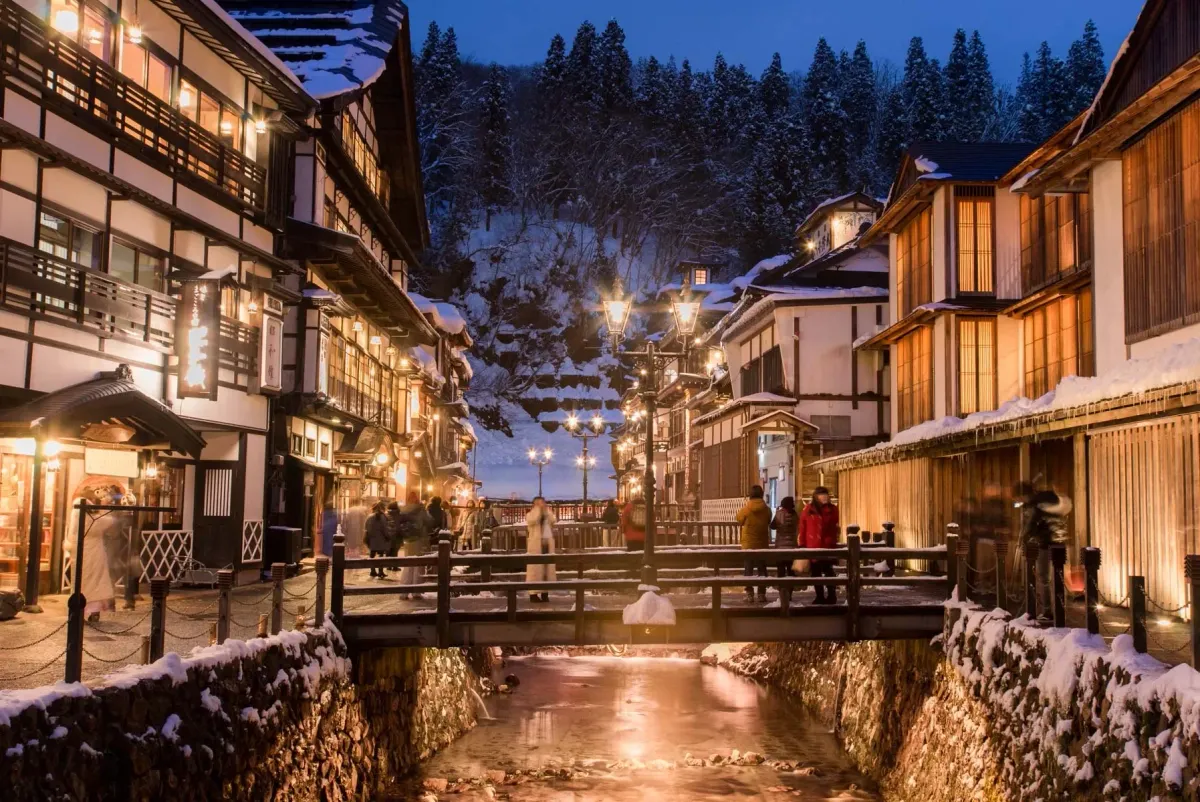
Higher tourist charges are often discussed as a way to reduce overcrowding, although Japan’s recent experience suggests that raising money and changing visitor behaviour should be assessed separately. A pricing measure can help a destination pay for better services even when it does relatively little to move people away from its busiest hours.
The Japan Tourism Agency published a review of seven local pricing cases in July, covering examples including transport, parking and attractions. These are individual approaches to destination management, rather than a single national charging system, and the results provide a useful guide to the practical choices facing places with concentrated visitor demand.
At Ginzan Onsen, a shuttle-bus trial during winter 2025/26 replaced a flat ¥500 fare with time-based prices, including ¥1,000 during the popular 14:00–18:00 period. In Shirakawa-go, revised municipal parking charges introduced in October 2025 increased the ordinary-car fee from ¥1,000 to ¥2,000 and the large-vehicle fee from ¥3,000 to ¥10,000.
The agency’s review says Ginzan’s shift of demand across the day was limited, although additional revenue helped fund a third shuttle bus and an information desk. Shirakawa-go reported approximately ¥480 million in parking revenue for fiscal 2025, compared with roughly ¥250 million the previous year, supporting maintenance and improvements to visitor facilities.
We hope you are enjoying this free article and please continue reading on below. Uchi Insights provides the latest market news from across Japan as well as global mountain resorts, most of it for free.
But we'd love a little love!
If you want the latest data and deep-dive reports, you can access premium Uchi Insights covering pricing, sales, supply and market trends across Japan’s leading resort real estate destinations.
Twelve months of Premium access costs US$200—roughly the price of a good pair of gloves for that Japanese powder snow.
If you are buying, selling, investing or simply trying to understand where Japan’s resort property markets are moving, make sure you have the same data and analysis at your fingertips.
Don’t be the one wondering what everyone else knows.
Ginzan’s experience is particularly useful because it separates the visitor’s preferred experience from the cost of accessing it. If someone travels specifically to see a destination at a certain time of day, a higher fare may be accepted as part of the trip rather than persuade that person to arrive earlier, leaving the operator to manage continued demand.
For a tourism-dependent community, the appropriate response may therefore involve several measures working together. Pricing can contribute to funding, while transport capacity, information and the organisation of arrivals address the physical experience, with each element judged against a clear objective rather than a general promise to solve overcrowding.
The implications extend to accommodation and property because guests experience the destination beyond the building in which they stay. Congested access, poor information or overburdened facilities can undermine a carefully managed hotel, while reliable shared services can support the experience that accommodation businesses are trying to sell.
Owners should consequently pay attention to how visitor charges are designed and where the proceeds go, rather than treating every increase as either a threat to demand or an automatic improvement. A transparent connection between the charge and a useful service makes the commercial and community case easier to assess.
Japan’s case studies suggest that the most informative question is what a pricing change has achieved in practice. Revenue, visitor distribution and service quality are separate outcomes, and a destination can make progress on one while still needing a different response to the others.
Sources
- Japan Tourism Agency—Seven Case Studies On Tourism Pricing: Results Summary. 28 July 2026; see Ginzan Onsen and Shirakawa-go cases. Japanese; government review.
- Ginzan Onsen—Time-Based Shuttle Fares: Case Presentation. 8 June 2026; published with the agency’s pricing case materials. Japanese; primary case presentation.
- Shirakawa Village—Municipal Parking Charges: Case Presentation. 2026; published with the agency’s pricing case materials. Japanese; primary case presentation.