The ¥40 Million Apartment That Explains Niseko’s Numbers
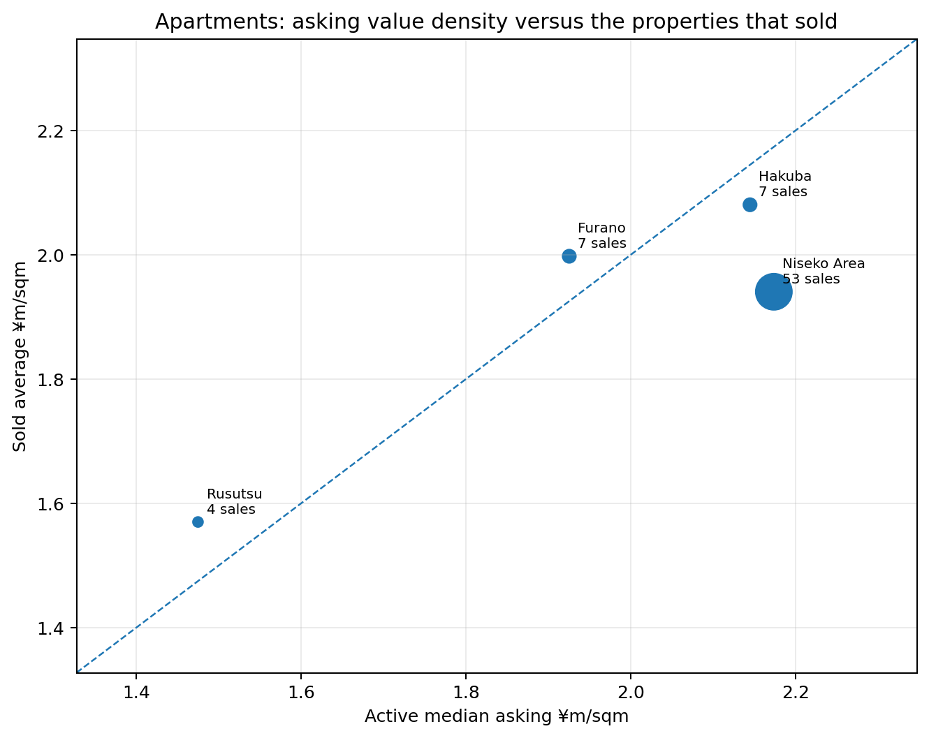
Hirafu apartment sales jumped from 13 to 53 and the median sold ticket fell to about ¥38 million, yet the median asking price stayed at ¥180 million and asking ¥/sqm edged higher.

Hirafu apartment sales rose from 13 to 53 between the two winters. The average indicative sold-listing value fell from ¥172.1m to ¥83.8m, and the median fell to ¥38.2m. If ticket price were the only metric we had, it would be easy to conclude that Hirafu apartments had undergone a major price correction.
The active asking market says otherwise. Hirafu’s active apartment median was ¥180.0m in Winter 2024/25 and ¥180.0m in Winter 2025/26. Median asking ¥/sqm also edged higher, from ¥2.19m/sqm to ¥2.22m/sqm. Even among sold apartments, average ¥/sqm remained around ¥1.94m/sqm. The lower ticket is therefore primarily telling us what kind of units sold.
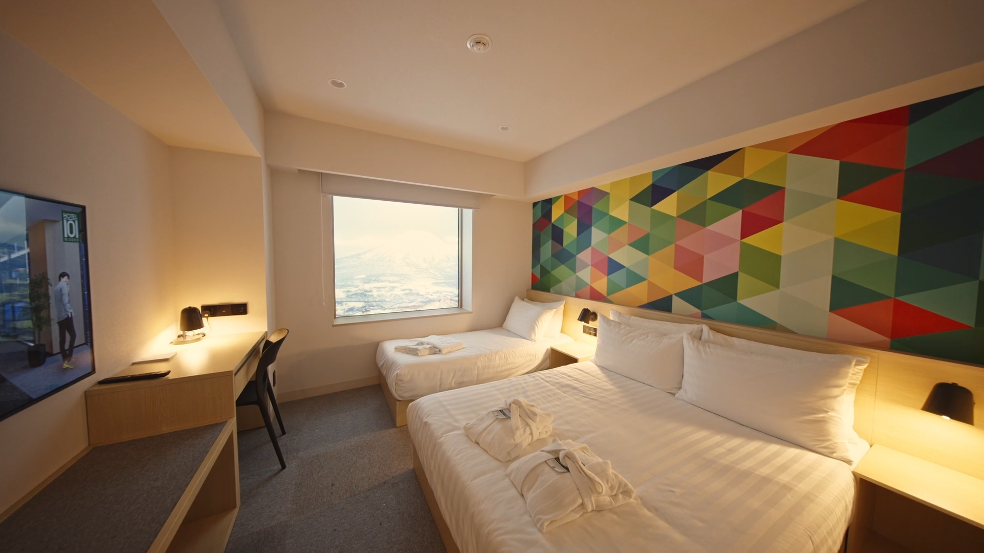
Uchi’s direct market context fills in the rest. A significant share of the current Hirafu apartment sales is attributable to Hotel101 Niseko, where comparatively compact units around ¥40 million can still carry value densities above ¥2 million/sqm. Lower total price and healthy ¥/sqm can therefore coexist perfectly rationally. That is why the apartment article now needs the active asking market beside the sales sample rather than treating one as a proxy for the other.