Hakuba’s next phase: from ski village to full-scale resort market
A cluster of lift upgrades, hotel signings and base-area redevelopment plans suggests Hakuba is moving into a new stage—one where infrastructure, branded hospitality and land scarcity are likely to matter as much as snowfall.

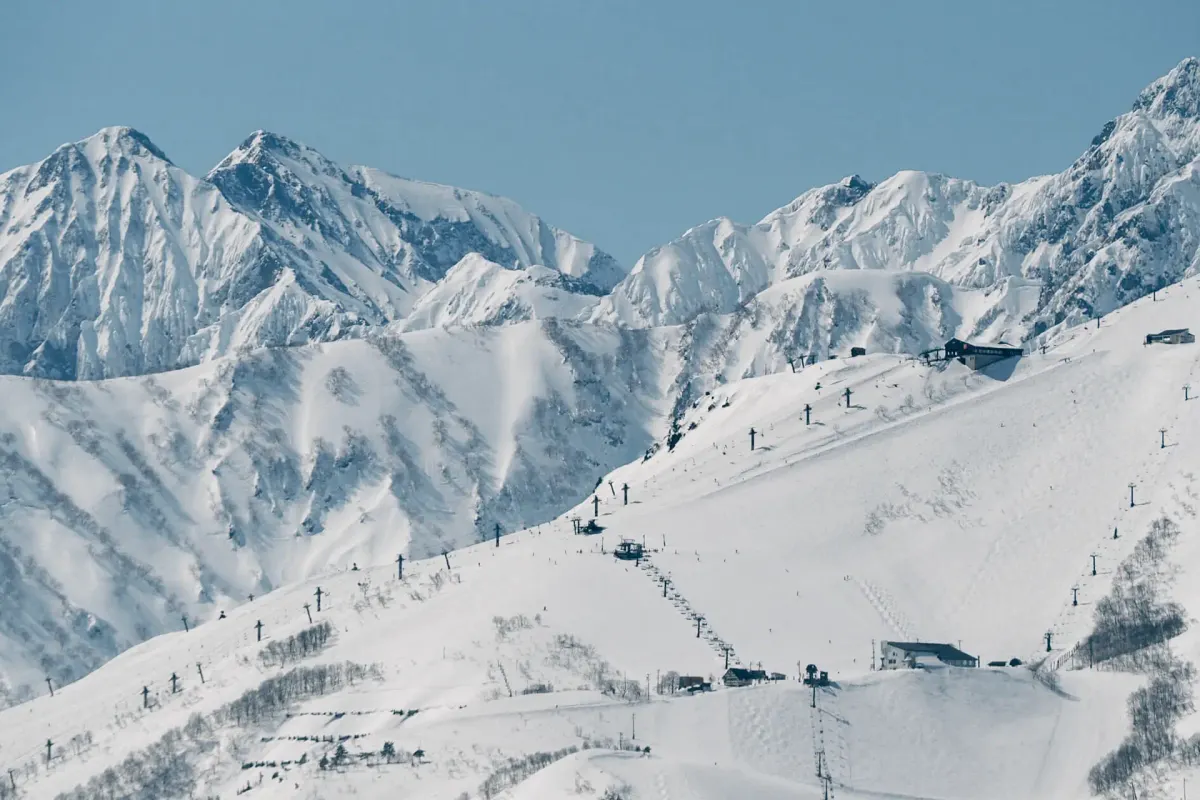
For years, the investment case for Hakuba has rested on a fairly simple proposition: strong snow, international appeal, relative accessibility from Tokyo, and a resort profile that still felt less institutionalised than Niseko. That is now changing.
What is taking shape in Hakuba is not just a few isolated projects. It is the early outline of a broader transition—from a highly attractive ski destination with fragmented infrastructure into a more fully capitalised mountain resort market. That does not mean Hakuba is becoming another Niseko, nor should investors assume that every new project will automatically lift values across the valley. But it does mean the conversation is shifting.
The latest wave of projects points in the same direction. The new Happo-one gondola and base-area plans, continued redevelopment around Iwatake, branded hotel activity in Echoland and near Hakuba Station, and new residential product such as MIRU Residences Hakuba all suggest that Hakuba is entering a more mature phase of investment.
That matters because in resort real estate, infrastructure and institutional confidence tend to be cumulative. A single luxury hotel does not transform a market. A single lift upgrade does not either. But when transport, hospitality and base-area improvements begin to reinforce one another, the market starts to re-rate.
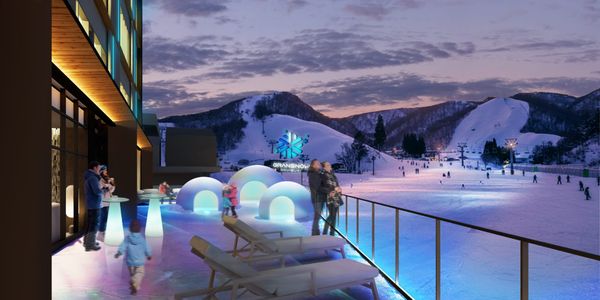
Happo-one is perhaps the clearest example. The planned new gondola, targeted for December 2027, is not merely a ski convenience upgrade. It is a statement that one of Hakuba’s most important resort areas intends to compete at a higher international standard. The project includes not only a new gondola but also a reworked base-area centre, with the operators explicitly framing it as part of a push towards greater global competitiveness. For investors, that is significant. Prime resort property values are rarely driven by snow quality alone; they are driven by the quality of arrival, circulation, guest experience and the perceived long-term seriousness of the destination.
Iwatake is also worth close attention, though for a slightly different reason. It has been one of Hakuba’s most interesting examples of all-season repositioning, using viewing terraces, food-and-beverage concepts and broader mountain experiences to widen its appeal beyond winter. Now the redevelopment is moving further down the mountain. The operator has pushed ahead with a new gondola, a renewed ski centre and a broader base-area strategy that includes attracting a high-grade international hotel partner. In practical terms, that suggests Iwatake is trying to build a more complete resort ecosystem rather than relying on ski traffic alone.
For investors, that distinction is important. The strongest resort markets increasingly win on year-round relevance, not just winter occupancy. A mountain that can pull visitors in green season, support better food and retail, and justify repeated capital expenditure is more resilient than one that depends almost entirely on powder and peak-season room rates.
The hospitality pipeline elsewhere in Hakuba strengthens the same thesis. In Echoland, the project now branded as Cassia Hakuba adds another internationally recognisable hospitality flag to the market, with 76 rooms and a format that sits somewhere between hotel and serviced-apartment product. That may not have the same signalling power as a true ultra-luxury opening, but it does suggest that global operators and developers still see room in Hakuba for professionally branded accommodation aimed at longer-stay and group travellers.
Accor’s signing of two Novotel hotels near Hakuba Station is another sign that investors should take seriously. Midscale branded supply is sometimes overlooked when people focus on trophy developments, but it often says more about the market’s direction. Luxury projects can be speculative, aspirational or heavily brand-led. Midscale hotel groups tend to be more pragmatic. When a company such as Accor commits to phased openings in a destination, it is usually because it sees a broadening visitor base and improving year-round commercial logic—not just a niche luxury story.
That does not mean Hakuba is suddenly under-supplied in every category. In fact, one of the challenges for investors will be understanding where supply is increasing and where genuine scarcity remains. More hotel rooms do not automatically translate into stronger residential pricing. In some submarkets they may help support values by improving the destination’s profile and services; in others they may simply add competition for short-stay demand.
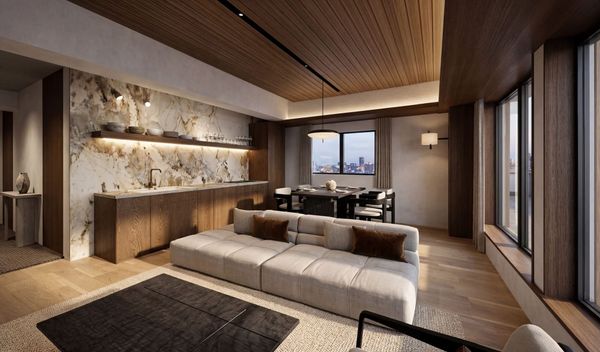
This is where residential projects such as MIRU Residences Hakuba become more interesting. New residential stock in prime Hakuba locations remains limited, particularly if it offers genuine operational quality and proximity to core lift infrastructure. In a market where much of the existing accommodation stock is older, fragmented or inconsistent in management standard, well-positioned new product stands out quickly. The risk, of course, is that investors extrapolate too much from that scarcity and start pricing every Hakuba asset as though it has the same fundamentals. It does not.
MIRU Residences Hakuba
There is also a wider geographic point that investors should not ignore. “Hakuba” is often discussed as though it were one coherent market, but it is not. Happo, Wadano, Echoland, Iwatake, station-adjacent areas and the wider Hakuba Valley all have different drivers. Even the Plan Do See activity in Norikura is a reminder of that. The company’s move into Hakuba Norikura through the renovation of Hakuba Alps Hotel is not taking place in central Hakuba village, but it still matters because it reflects growing conviction across the wider valley. Capital is spreading outward.
The bullish case, then, is fairly clear. Hakuba appears to be moving from a market powered mainly by natural assets and international word-of-mouth into one increasingly backed by real infrastructure spending, branded hospitality and more sophisticated place-making. If that continues, the long-term effect should be positive for the best-located land and the most credible residential product.
The more cautious view is just as important. Hakuba is still operationally fragmented, highly seasonal in places, and exposed to execution risk. Large announcements are not the same as completed delivery. Infrastructure can slip. Hotel projects can change brand or timeline. And the more capital that flows into a resort market, the more discipline investors need around entry price.
That is probably the real takeaway. Hakuba is becoming more investable—but also less forgiving of lazy analysis. The easy phase, when almost any well-located asset could ride the market’s broad rise in international attention, may be giving way to something more selective. In the next chapter, proximity to lifts will still matter. But so will adjacency to upgraded infrastructure, strength of operator, year-round demand drivers and the precise submarket story.
For serious investors, that is not a reason to be wary of Hakuba. It is a reason to look more closely.