A new hotel-condo in Karuizawa points to growing confidence in Japan’s lifestyle resort markets
List’s latest luxury hotel-condo project in Karuizawa is another sign that branded, high-end hospitality-linked residential product is spreading beyond Japan’s ski markets and into established lifestyle destinations with strong year-round appeal.

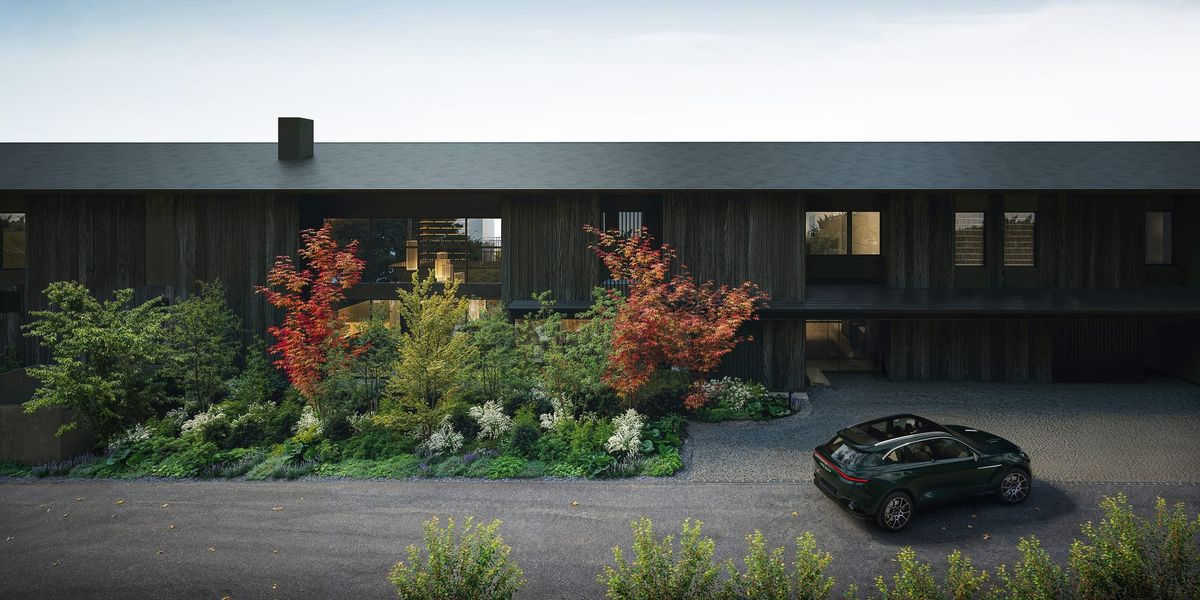
List’s newly announced luxury hotel-condominium project in Karuizawa is not a major development by scale, but it is still a useful signal.
The project, Karuizawa Retreat muro, will comprise just 17 keys and is due to launch sales in late June, with completion scheduled for October 2027. It will be operated by Onko Chishin, the same hospitality group involved in La Vigne Hakuba, which List opened in 2024 as its first hotel-condo project. In that sense, this looks less like an isolated announcement and more like a sign that the company sees enough depth in Japan’s high-end resort and lifestyle markets to build a second branded scheme.
For investors, that matters.
Over the past few years, much of the focus in Japan’s resort property conversation has centred on ski destinations such as Niseko and Hakuba. Karuizawa is a different kind of market. It is not driven by powder or winter tourism in the same way. Its strength lies instead in proximity to Tokyo, established domestic prestige, summer climate, greenery and a long-standing second-home culture. When hospitality-linked residential product is being developed in a market like this, it suggests confidence not only in tourism, but in the broader appeal of lifestyle-driven ownership.
The details of the project reinforce that positioning. The development is located around 12 minutes on foot from Naka-Karuizawa Station, on a 3,264.57 square metre site, with unit sizes ranging from roughly 71 to 162 square metres across studio, one-bedroom and two-bedroom layouts. But what makes it more distinctive is the way it is being framed. Rather than a conventional hotel block, the scheme is being positioned as a low-density woodland retreat, with the architecture designed to sit within the trees and the rooms arranged more independently rather than in a straight linear format.
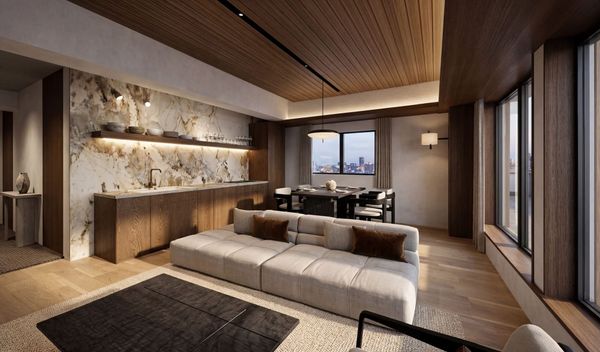
That emphasis on privacy seems deliberate. The project’s concept is described as “woodland architecture”, with a stronger sense of separation between units and a closer relationship between the built form and the natural surroundings. The architect is Makoto Shirahama Architectural Design Office, and all rooms will feature private onsen spa baths, while some will also include saunas or inner balconies. Shared spaces will include B&B Italia interiors, a double-height bar lounge and a restaurant with a live kitchen.
In other words, this is clearly aimed at affluent buyers looking for something closer to a second-home experience with hospitality support, rather than standard branded accommodation.
That is the more interesting point. Japan’s branded or operator-linked residential market remains relatively niche, but it appears to be broadening. Karuizawa is an established market with deep domestic recognition, and it does not need to be “discovered” in the way an emerging resort might. That makes it a useful test case for whether luxury hotel-condo product can gain traction in mature lifestyle destinations, not just ski resorts with strong international narratives.
The bullish view is straightforward: buyers increasingly want high-quality second homes with privacy, service and operational credibility, especially in destinations that are easy to use year-round. Karuizawa fits that brief very well.
The more cautious view is that these projects remain highly selective. A small luxury hotel-condo does not redefine the whole market, and investors should not assume that every branded or hospitality-linked scheme automatically carries pricing power. In Japan especially, exact location, operator quality and the long-term strength of the destination still matter more than branding alone.
Even so, this is another sign that Japan’s resort and lifestyle property market is becoming a little more sophisticated. It is not just about ski towns, and it is not just about pure hotel development. Increasingly, the market is exploring formats that sit somewhere between the two: private ownership, hospitality service, design-led positioning and year-round usability.
Karuizawa looks like a natural place for that to happen.