What Kutchan’s foreign tax milestone really says about Niseko
Foreign owners now paying the majority of fixed-asset tax in Kutchan is less a curiosity than a sign of how fundamentally Niseko’s ownership and investment base has changed.

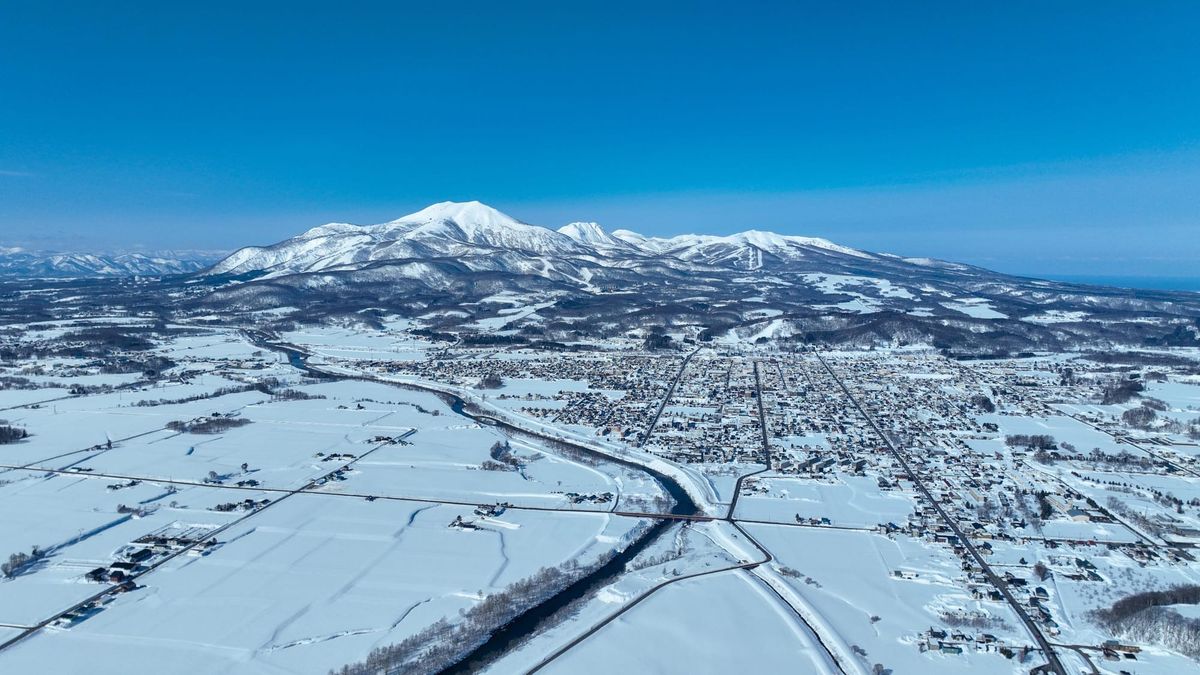
At first glance, the headline sounds symbolic: foreign owners now pay the majority of fixed-asset tax in Kutchan, the town at the centre of Niseko’s best-known resort areas. But for investors, the significance is not symbolic at all. It is structural.
According to the reporting behind the story, overseas owners paid around ¥1.283 billion in fixed-asset tax in fiscal 2024, compared with roughly ¥1.147 billion paid by Japanese owners. Total fixed-asset tax revenue reached a record ¥2.431 billion, and foreign-owned land in Kutchan’s resort areas also expanded sharply over the year. That is not simply a sign of international interest. It is evidence that international ownership is now deeply embedded in the fiscal base of one of Japan’s most globalised resort markets.
That distinction matters.
For years, people have described Niseko as “international”, but the word can mean almost anything—foreign tourists, English menus, overseas developers, branded hotels, seasonal workers or luxury second homes. Tax data is more concrete. It shows that foreign capital is not just visible in Niseko; it is now carrying a larger share of the town’s property-tax burden than domestic ownership.
For investors, that says two things at once.
The first is straightforward: Niseko has matured into a market with an unusually global ownership base by Japanese standards. This is no longer a resort where overseas demand sits at the margin. In key parts of Kutchan, it is central to the economics of the place. That helps explain why Niseko continues to attract attention even as other Japanese resort markets rise in profile. International investors often prefer markets where foreign participation already feels normalised—where there is a precedent for overseas ownership, a critical mass of internationally legible product, and local institutions that are used to dealing with non-Japanese buyers and operators.
The second point is more complicated. When foreign ownership becomes this prominent, the market’s success and the town’s fiscal health become more directly tied to the behaviour of global capital. That can be positive—foreign investment has clearly expanded the tax base, lifted land values and supported local revenues—but it also makes the town more exposed to cycles in external demand, exchange rates and global risk sentiment.
In other words, the same internationalisation that helped build modern Niseko also changes the type of risk the market carries.
That does not mean the trend is negative. On the contrary, there is a strong argument that this tax milestone should reassure long-term investors. A large and growing property-tax contribution from foreign owners suggests that overseas investment is not a passing wave. It is producing recurring local revenue, not just one-off transactions. That matters because a stronger tax base gives local government more capacity—at least in theory—to support infrastructure, services and resort management in a market where those needs have become more demanding.
Kutchan’s own tourism planning materials show why that matters. The town has openly acknowledged the pressures that rapid tourism and development have created in the Hirafu area, including congestion, sprawl, strains on public spaces and the need for stronger transport and resort functions. When a larger share of the tax base is coming from internationally owned property, the case for reinvesting in resort infrastructure becomes even more important.
For property investors, this is where the story becomes more interesting than the headline.
The bullish interpretation is that Niseko’s tax data reinforces the market’s depth. Foreign owners are not merely buying into a speculative narrative; they are now part of the recurring financial reality of the town. That tends to support the idea that Niseko has moved beyond the early-stage phase of international resort discovery and into something more established. Compared with emerging mountain markets elsewhere in Japan, Niseko still looks the most institutionalised.
But the milestone also sharpens the social and political questions around growth. As resort markets globalise, local concern tends to rise alongside valuations. More foreign ownership can mean stronger public finances and higher-grade development, but it can also intensify unease about affordability, cultural change and whether the benefits of growth are being shared evenly. Reporting in 2026 has already highlighted those tensions in the wider Niseko area, where rising prices and living costs are becoming harder for some residents to absorb.
That matters for investors because resort markets do not operate on pricing alone. They also depend on local licence to grow. If residents feel increasingly detached from the upside, or if infrastructure falls behind private development, regulation and planning tend to become more assertive over time. That is not unique to Niseko. It is a common feature of successful resort towns globally. But it does mean investors should think about governance, infrastructure and community sentiment as part of the long-term investment case—not as secondary issues.
There is also a subtle point about market composition. A tax milestone like this does not mean every part of Niseko is equally liquid or equally protected. What it shows is the strength of international ownership in aggregate. Within that, the usual distinctions still matter: location, quality, management model, land scarcity, operating resilience and exact exposure to the most internationally demanded parts of the resort. A rising tide does not remove submarket differences.
Even so, the broader conclusion is difficult to avoid. Niseko is no longer just Japan’s most famous international ski market in branding terms. It is increasingly so in fiscal terms as well. Foreign capital is not simply influencing prices; it is now helping fund the town itself.
For investors, that is both encouraging and cautionary. Encouraging, because it underlines how deeply rooted international demand has become. Cautionary, because it reminds us that the future of Niseko depends not just on attracting capital, but on how successfully that capital is absorbed, governed and translated into a destination that can sustain its own success.
That is probably the real meaning of the headline. It is not just that foreign owners now pay most of Kutchan’s property tax. It is that Niseko has reached a stage where international investment is no longer an overlay on the resort. It is part of the core system.