Niseko ranked Japan’s most inbound-heavy destination in 2025
New smartphone location data suggests Niseko had the highest share of international visitors of any destination in Japan in 2025, underlining both the strength of inbound demand in key resort markets and the uneven spread of tourism across the country.


Niseko was the most inbound-heavy destination in Japan in 2025, according to a new analysis of smartphone location data, highlighting just how concentrated international tourism remains in a small number of established hotspots.
The study, carried out by Tokyo-based IT company Unerry together with Kyodo News, analysed visitor movement data across roughly 25,000 one-kilometre grid squares nationwide. Looking at the proportion of total foot traffic accounted for by international visitors, Niseko Resort ranked first in Japan. The findings reinforce what many in the property and tourism sectors already suspect: while inbound demand continues to grow, the economic benefits remain heavily concentrated in a relatively small number of destinations.
That concentration is striking. Of the top 100 areas with the highest share of foreign visitors, 72 were located in just seven prefectures. Across all 47 prefectures, only 22 had even a single location in the top 100, while 25 prefectures had none at all. In other words, Japan’s inbound tourism boom is still far from evenly distributed.
Kyoto had the largest number of ranked locations with 17, followed by Hokkaido with 16 and Kanagawa with 11. Yamanashi, Osaka, Okinawa and Tokyo also featured prominently. Hokkaido’s showing was especially notable. Alongside Niseko in first place, Furano, Lake Toya Onsen and Noboribetsu Onsen also ranked among the country’s most inbound-oriented destinations.
For resort real estate, that matters.
These results underline the extent to which international tourism in Japan continues to cluster around a relatively small group of highly legible destinations: major urban centres, famous cultural sites, and a handful of resort markets with strong overseas recognition. Niseko’s position at the top of the ranking is not just a tourism headline. It is another sign of how deeply international demand is embedded in the market.
The broader picture remains uneven. Official tourism data for 2025 showed that Tokyo, Osaka, Kyoto, Hokkaido and Okinawa accounted for nearly 70% of all foreign guest nights in Japan. In 31 prefectures, foreign overnight stays remained below 1% of the national total. That imbalance has reinforced concerns around overtourism in some places, while also highlighting the challenge of spreading visitors more effectively across regional Japan.
The ranking also showed how concentrated inbound demand can be within each prefecture. In Kyoto, foreign visitors clustered around major temples and shrines, with the area around Kiyomizu-dera among the highest ranked. In Kanagawa, Hakone Onsen featured strongly, while in Yamanashi the Fuji Five Lakes area recorded multiple top-100 locations.
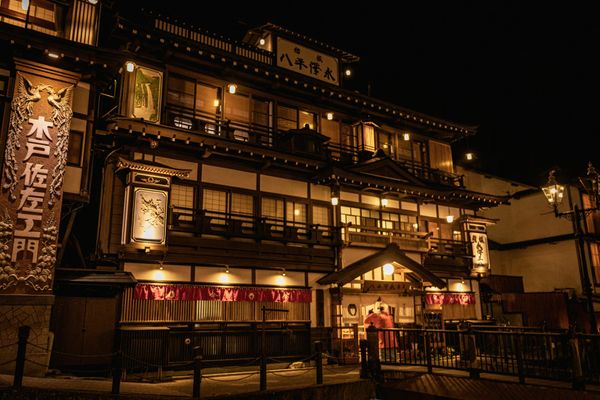
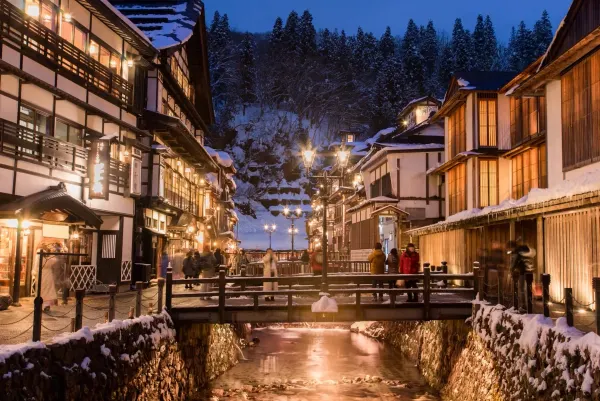
Some regional standouts also emerged. Ginzan Onsen in Yamagata ranked fourth and was the only entry from the six prefectures of Tohoku, reportedly helped by overseas attention on social media. Naoshima in Kagawa was the only ranked location in Shikoku, while Miyajima in Hiroshima and Nikko in Tochigi were the only representatives from their wider regions. Hokuriku had no locations in the top 100 at all.
There is also an important methodological point. Because the analysis measured the proportion of visitors who were international, rather than total visitor numbers, the ranking tends to favour destinations where foreign travellers make up a particularly large share of overall activity. That means some niche or highly internationalised resort and tourism areas rank above larger domestic-heavy destinations. In broad resort areas, several nearby one-kilometre zones could also rank separately.
Even with that caveat, the implications are clear. Japan’s inbound tourism story is still defined by concentration, not dispersion. For the country’s best-known resort markets, that is a positive signal. It supports the view that destinations such as Niseko and Furano continue to benefit from very strong international visibility. But it also shows how much work remains if Japan wants to spread foreign visitor spending more widely across the country.
For investors, the takeaway is fairly straightforward. The strongest resort and tourism markets are becoming stronger because they are already recognised, already visited and already easy for overseas travellers to understand. That creates momentum—but it also reinforces the gap between Japan’s globally visible destinations and the many regional markets still waiting for a bigger inbound breakthrough.
Source: Hokkaido Newspaper Online (Subscription required: Japanese language only)