Niseko Has No Shortage of Projects. Delivery Is the Harder Part.
Niseko continues to attract ambitious developments and major brands, but announced investment is not the same as completed supply. A reported construction pause in Hanazono offers a timely case study in delivery risk, planning deadlines and how buyers should assess the resort’s future pipeline.

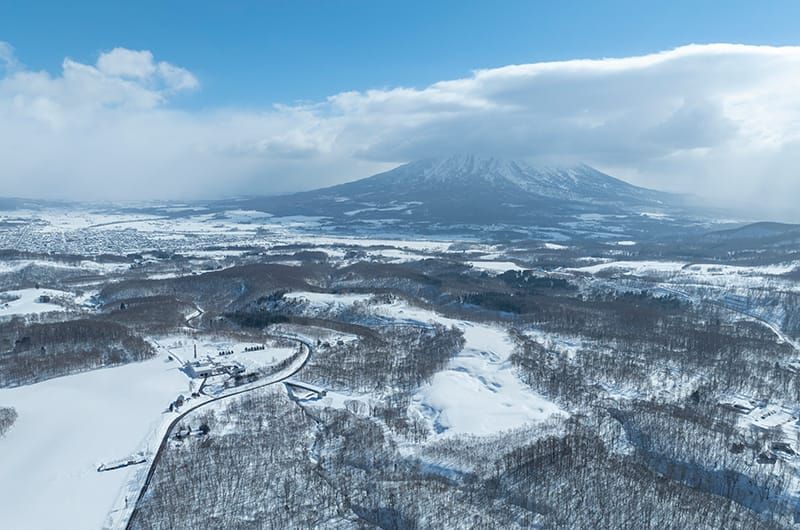
The latest interruption at one of Niseko’s largest proposed developments is a reminder that announced investment and deliverable property supply are not the same thing.
Niseko’s development pipeline contains some of the most ambitious resort projects in Japan. International hotel brands, large wooded sites and plans for new hotels, residences and villas have become familiar parts of the market’s long-term story.
Yet a development pipeline is only as reliable as the projects that eventually emerge from it.
That distinction has become particularly relevant following reports that civil engineering work has stopped at Niseko Hanazono Village, an approximately 42-hectare resort development planned for the Hanazono area of Kutchan.
The project is expected to include two Capella-branded hotels, condominium accommodation, around 30 villas, an onsen and a swimming pool. If completed as envisaged, it would be one of the largest integrated developments in the Niseko region and the first Capella Hotels & Resorts property in Japan.
According to the Hokkaido Shimbun, work stopped in early July after payments to a contractor were delayed. The newspaper reported that construction workers had left the site while an access road required before building work can begin remained incomplete.
The parties involved had not issued a detailed public explanation reviewed by Uchi Insights at the time of writing, and the eventual outcome remains uncertain. Work could restart, the deadline may be met and the project could continue on a revised timetable.
Nevertheless, the circumstances provide a useful case study in how investors should interpret Niseko’s large and frequently changing development pipeline.
A project is not one thing
Major resort developments are often discussed as though they are controlled by a single organisation. In practice, a project may involve separate landowners, investors, special-purpose companies, lenders, contractors, hotel operators, architects, sales agents and asset managers.
The appearance of a recognised hotel brand is commercially important. It may influence the concept, operating standards, marketing and expected positioning of the finished resort.
It does not necessarily mean that the hotel brand owns the land, finances the construction or guarantees that the development will be completed. In this case, Capella is the intended hospitality brand, while the development itself is being advanced through a separate Japanese special-purpose company backed by overseas investment.
That distinction is not unique to Niseko. It is normal throughout international hotel development, but it is easily overlooked when a proposed project becomes commonly known by the name of its future operator.
Buyers and market observers should therefore distinguish between the credibility of a hospitality brand and the capacity of the underlying development structure to finance and deliver a complex construction project. Both matter, but they are not interchangeable.
The planning clock changes the significance of a delay
Construction delays are hardly unusual in Niseko. Projects must contend with labour shortages, rising building costs, long winters, infrastructure requirements and a limited construction season. Completion dates can move substantially without preventing a project from eventually being delivered.
The present case may be different because the delay is occurring immediately before a regulatory deadline.
Kutchan Town introduced stricter land-use rules in October 2023, prohibiting hotels and ryokan in principle across several conservation districts. Transitional measures were created for certain developments that had already received approval and begun work before the new restrictions came into effect.
The town’s official guidance states that qualifying buildings must have begun construction by 30 September 2026 to continue benefiting from the transitional arrangements.
The Hokkaido Shimbun reports that the Niseko Hanazono Village site falls within one of the affected conservation areas and that an unfinished access road must be completed before building construction can start.
If the project does not meet the necessary requirements by the deadline, the existing hotel proposal may no longer be able to proceed in its current form under the transitional treatment. That would not necessarily make every form of development impossible, but it could require a significant reconsideration of the plans.
This is what makes the present interruption more consequential than another postponed opening date. The issue is not simply whether completion moves from one year to another, but whether delay could change what is legally possible on the site.
Announced supply is not completed supply
Niseko’s future pipeline is frequently used to support opposing arguments.
One side points to the number of planned hotels and residences as evidence that the destination continues to attract capital and international confidence. The other sees the same figures as evidence that a large wave of new supply may eventually place pressure on occupancy and prices.
Both arguments can be misleading when they treat every announced project as equally likely to be completed.
There is a material difference between:
- a project that has been publicly proposed;
- a project with planning approval;
- a site undergoing preliminary civil engineering;
- a building that has started vertical construction;
- a substantially completed property; and
- a finished hotel or residence that is operating successfully.
Each stage removes some forms of risk while leaving others in place. Counting all proposed rooms or residences as future supply gives equal weight to projects separated by very different levels of funding, construction and regulatory certainty.
The Niseko Hanazono Village project demonstrates that even extensive civil works do not necessarily mean that building delivery is assured. The Hokkaido Shimbun reported that the civil engineering programme was approximately 75% complete, yet the unfinished access road may still prevent the project from reaching the next stage before a critical deadline.
For meaningful market analysis, Niseko’s pipeline should therefore be probability-weighted rather than simply totalled.
Timetables need to be treated cautiously
The project was initially expected to open in 2025. After an earlier suspension, reporting in April 2025 suggested that it might be completed as early as 2026.
A timetable presented later that year was markedly different, with civil engineering expected to finish in August 2026 and the overall development scheduled for completion in February 2032.
Changing schedules do not by themselves imply that a project will fail. Large developments are often redesigned, divided into phases or adjusted in response to market conditions. In a region with Niseko’s construction constraints, a cautious and extended timetable may be more credible than an aggressive one.
However, large changes between publicly discussed completion dates illustrate why proposed opening years should not be incorporated into investment assumptions without substantial allowance for delay.
This applies beyond one development. Niseko has repeatedly seen projects announced with considerable ambition before being redesigned, postponed, sold or left incomplete. At the same time, other developments have taken many years to deliver but have ultimately opened successfully.
The useful lesson is therefore not that delays inevitably lead to failure, but that announcements are the beginning of the development process rather than the end.
The Capella name has appeared in Niseko before
The current Hanazono proposal is also not the first Capella-branded resort announced for Niseko.
In 2010, a separate project was promoted for a wooded site near Annupuri. Designed by architect Tadao Ando, it was planned to include 67 hotel suites, 94 apartments, 36 houses and 19 villas, with construction expected to begin that year and completion anticipated in 2012. Contemporary reporting said deposits had already been received for more than 40 residences.
The completed resort described in those plans did not ultimately appear.
It is important not to conflate the former Annupuri proposal with the present Hanazono project. They concern different sites, different periods and different development structures. Nor does the history demonstrate any responsibility on the part of the proposed operator for the present circumstances.
It does, however, illustrate a wider point about branded resort development. An internationally recognised operator, celebrated architect and early sales activity can all improve a project’s prospects without eliminating the financial, regulatory and construction risks that remain before completion.
A stalled project does not necessarily weaken the wider market
It would be equally mistaken to interpret difficulty at one development as evidence that the entire Niseko market is in trouble.
Large projects can encounter difficulties for reasons specific to their ownership, financing, site or construction programme while demand and investment elsewhere remain healthy. Niseko continues to have active developments, substantial tourism demand and international interest across several parts of the resort.
The Hokkaido Shimbun quoted another local developer as saying the interruption was unlikely to affect investment in Niseko as a whole.
There is also no straightforward relationship between a delayed development and falling property values. If a major project does not deliver its proposed hotels and residences, the result may be less future accommodation supply than the market had anticipated.
That could preserve scarcity in other parts of the market, although it could also delay infrastructure improvements, amenities and economic activity expected around the project site.
The effects are therefore likely to be localised and mixed rather than uniformly positive or negative.
What buyers should take from the story
For purchasers of completed homes, the direct implications may be limited. A finished property with established management, access and services presents a different risk profile from a residence being purchased several years before completion.
For buyers considering pre-construction property, the questions should extend beyond the visual quality of the proposed development and the reputation of the eventual operator.
Relevant areas of enquiry include:
- ownership of the land and project company;
- the status of planning and building approvals;
- whether finance has been secured for the full development or only an initial phase;
- the identity and appointment status of the main contractor;
- the extent of completed access and utility infrastructure;
- the treatment of buyer deposits;
- the conditions allowing withdrawal or delay;
- the developer’s record on comparable projects; and
- whether completion depends upon future sales or additional funding.
No single answer determines whether a project is safe or unsafe. The objective is to understand which risks remain and whether they are reflected in the purchase structure and price.
Delivery is becoming a market differentiator
Niseko’s attraction to investors does not depend upon every announced development being completed. The destination’s growth has always included projects that changed direction, took longer than expected or never progressed beyond planning.
However, as projects become larger and more complex, the ability to deliver may become a more important point of differentiation between developers.
Sites with secure finance, established contractors, completed infrastructure and visible vertical construction should command greater confidence than projects that remain dependent upon several unresolved steps, even where both carry equally prestigious designs or brands.
For analysts, the same principle applies. Future supply should be assessed according to the likelihood and timing of delivery, not merely the scale of what has been announced.
The long-term case for Niseko and the prospects of any individual project are separate questions. Niseko can continue to attract visitors, buyers and investment while particular developments experience serious delays.
The latest interruption at Niseko Hanazono Village does not settle either question. What happens before the end of September may, however, offer a valuable indication of whether one of the area’s largest proposed developments can move from an ambitious plan to a deliverable project.