Chalet Alpina Links Luxury Property And Ski Access In Aspen
Chalet Alpina has broken ground at Aspen’s historic Lift One base in the USA, combining luxury residences with a replacement lift and new public facilities. The project offers a useful case study in how mountain property, access and construction timetables depend on each other.

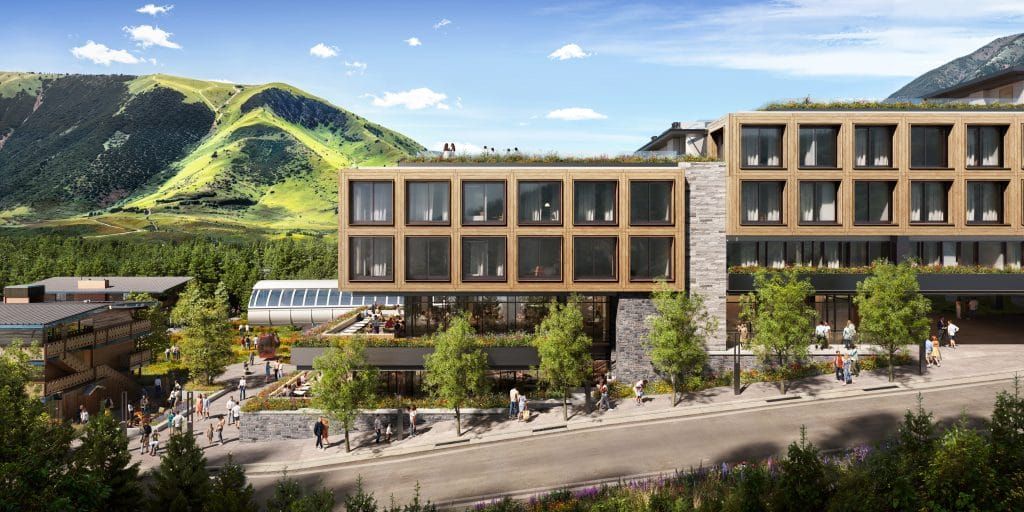
Construction is now fully under way at Chalet Alpina, a development at Aspen Mountain’s historic Lift One base that will combine shared-ownership residences and private homes with a new connection between the town and the mountain. The project’s anticipated completion in 2030 follows years of planning, a narrowly won public vote and preliminary infrastructure work that began in September 2025, according to The Aspen Times.
Its property offering is aimed at the upper end of the resort market. Yet the redevelopment also includes a lift closer to downtown, new public park space and the restoration of historic buildings. For anyone assessing mountain property, that combination raises a practical question: how much of a development’s appeal depends on infrastructure that must be delivered alongside it?
Two different forms of ownership
The offering described in the September announcement comprises 26 fully serviced resort residences with two, three or four bedrooms, sold through shared ownership, and six private mountain homes with four or five bedrooms, sold through full ownership. Planned facilities include wellness and dining amenities, with a membership component forming part of the wider development.
The Aspen Times reported on 3 September that shared-ownership pricing starts below US$3 million, while the private mountain homes start in the mid-US$40 million range. Published pricing is not entirely consistent: the developer’s website continues to display a starting figure in the mid-US$30 millions for the mountain homes. The reported figures should therefore be read as attributed marketing prices, rather than evidence of completed transactions.
The ownership distinction matters just as much as the numbers. The sub-US$3 million figure buys a shared interest, whereas the mountain homes are offered for whole ownership. A comparison with an outright property purchase elsewhere would need to account for the share being acquired, the owner’s allocation of stays and ongoing costs. The entry prices alone cannot establish whether either product represents better value.
Bringing the lift closer to town
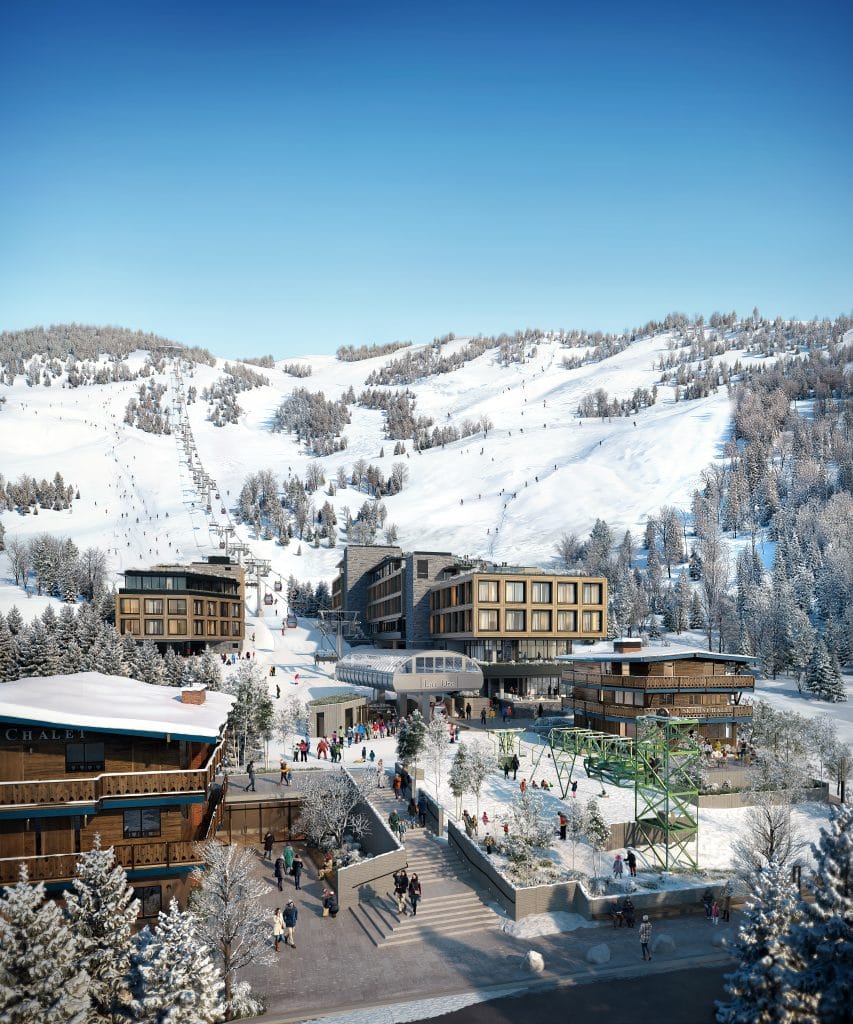
The planned replacement lift will load at Dean Street, approximately 500 feet, or 150 metres, closer to town than the former Lift 1A. Removal of Lift 1A began in July. The broader redevelopment includes two acres of new park space, public lockers and dedicated pedestrian and cycle access along Dean Street, with the intention of making the base easier to reach throughout the year.
Several historic structures will also be restored and repositioned. One of the two Skiers Chalet buildings is intended to accommodate the Aspen Snowsports History Museum at Skiers Chalet, operated by the Aspen Historical Society, alongside an Aspen Skiing Company guest services office. The Skiers Chalet Restaurant is also due to reopen after more than two decades of inactivity.
These public facilities give the scheme a wider purpose than serving its residents. A lift station closer to town changes where skiers enter the mountain, while lockers and pedestrian access can make that connection more useful to people staying elsewhere. Whether the area becomes an active year-round neighbourhood will also depend on how its restaurants, public spaces and museum operate once construction is complete.
A long timetable with shared dependencies
Irongate Group and Aspen-based HayMax Capital acquired the site in 2015 and worked with the city and Aspen Skiing Company on a 2018 master plan. Voters approved the proposal in 2019 by 1,555 votes to 1,529. That 26-vote margin is a reminder that agreement over the future of a historic resort neighbourhood can be difficult, even when a scheme includes public improvements.
The construction programme requires coordination between Chalet Alpina, the neighbouring Aman Aspen development, Aspen Skiing Company and the city. Aspen Journalism’s analysis of the construction sequencing agreement identifies an estimated opening for the replacement lift in winter 2029/30, dependent on substantial progress on both accommodation projects. Chalet Alpina’s interior completion is indicated for summer 2030. The schedule is an estimate rather than a binding commitment to those dates.
That timetable implies at least three winters without an operating lift in the corridor, according to the same reporting. For nearby accommodation, the intervening construction period deserves attention alongside the eventual improvement in access. Proximity to a future lift and proximity to a functioning lift offer different guest experiences, particularly when the work involves several owners and interdependent building programmes.
The comparison for Japan
The useful comparison for Japan concerns the relationship between a property and the skiing it actually accesses. In our recent Moiwa market analysis, we noted that Moiwa operates separately from Niseko United and is outside its All Mountain lift pass. A Niseko address alone does not describe the same skiing proposition in every location. Aspen’s Lift One redevelopment adds another dimension: even where the intended connection is clear, the date it becomes operational matters.
For a Japanese hotel or residential project promoted around new mountain access, the same questions are worth asking. Who controls the connection, and what work has to happen before guests can use it? If the accommodation opens first, how will they reach the mountain in the meantime? Chalet Alpina offers a concrete example of those dependencies being addressed through a coordinated construction agreement. Its eventual performance will depend in part on how closely the buildings, lift and public facilities arrive together.
We hope you enjoyed this free article. Uchi Insights provides the latest market news from across Japan as well as global mountain resorts, most of it for free.
But we'd love a little love!
If you want the latest data and deep-dive reports, you can access premium Uchi Insights covering pricing, sales, supply and market trends across Japan’s leading resort real estate destinations.
Twelve months of Premium access costs US$200—roughly the price of a good pair of gloves for that Japanese powder snow.
If you are buying, selling, investing or simply trying to understand where Japan’s resort property markets are moving, make sure you have the same data and analysis at your fingertips.
Don’t be the one wondering what everyone else knows.
SourceS
- The Aspen Times — Chalet Alpina breaks ground at Aspen Mountain’s historic Lift One base. 3 September 2026. Construction milestone, development offering, reported pricing, public facilities and anticipated completion.
- Chalet Alpina — Residences. Checked 18 September 2026. Developer’s advertised ownership options and pricing; the whole-ownership entry figure differs from the September news report, as explained in the article.
- Aspen Journalism — Lift One corridor construction plan anticipates three years before new lift opens. 14 August 2026, updated 17 August. Construction dependencies, estimated lift opening and schedule qualifications.
- Uchi Insights — Niseko-Moiwa’s 2025 Property Market. 16 September 2026. Context for the Japan comparison and the distinction between Moiwa and Niseko United access.