Two New Hotels Show Sapporo’s Hospitality Market Is Still Expanding
More than 400 new hotel rooms are set to open in central Sapporo within months of each other, adding another signal of confidence in Hokkaido’s gateway city as international tourism continues to grow.

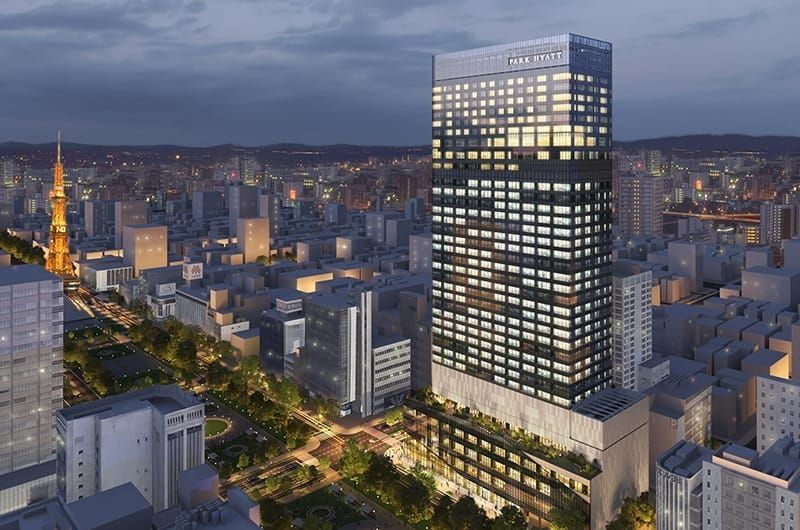
Two hotel announcements made within days of each other will add more than 400 rooms to central Sapporo, providing another indication that investors and operators remain confident in the long-term growth of Hokkaido’s largest city.
Hyatt Centric Sapporo is scheduled to open this autumn with 216 rooms across the upper ten floors of the 26-storey Urban Net Sapporo Link Tower. The hotel sits between Sapporo Station and Odori, with all rooms measuring at least 36 sqm, nine suites, two restaurants, a bar, event space and fitness facilities. Reservations are already being accepted for stays from 1 December.
A few months later, Samty Holdings plans to open a 196-room S-PERIA hotel between Odori and Susukino in late January 2027. The 13-storey property will offer a mix of double, twin and triple rooms together with connecting rooms, a restaurant and large public bath, targeting both individual travellers and families or groups.
The two hotels occupy different parts of the market, but their timing is notable. Together they will add 412 rooms in highly central locations at a point when Sapporo’s visitor economy is again expanding, particularly from overseas.
Sapporo’s International Visitor Base Is Growing Again
The latest published Sapporo City figures show approximately 9.61 million visitors in the first half of fiscal 2025, covering April to September, up 3.1% from the previous year. More strikingly, the number of foreign hotel guests increased 17.2% to around 941,000 during the same six-month period.
That helps explain why Sapporo remains attractive to hotel capital even though Hokkaido as a whole is losing population. A hotel market is driven less by the number of people permanently living nearby than by how many people want to visit, how long they stay and what they are prepared to spend.
Sapporo also occupies an unusually useful position within Hokkaido tourism. It is a destination in its own right, with food, shopping, events and winter attractions, but it is also the island’s principal urban gateway. Travellers heading to Niseko, Furano or other parts of Hokkaido frequently spend time in the city at one or both ends of their trip, while Sapporo’s appeal extends well beyond the winter months.
The new hotels reflect that broader positioning. Hyatt Centric is not being developed as a conventional airport or business hotel. Its 36 sqm-plus rooms, high-floor views, restaurants and locally influenced design place it towards the lifestyle end of the market, while its position within a mixed-use tower connects hospitality with the continuing redevelopment of central Sapporo.
The S-PERIA project is more practical in its positioning, but its location between Odori and Susukino puts it directly into one of the city’s strongest tourism districts. The inclusion of triple and connecting rooms also reflects a market increasingly accommodating leisure travellers and families rather than relying solely on individual business demand.
Hokkaido’s Hospitality Story Is Broader Than Niseko
For international property investors, discussion of Hokkaido development can easily become dominated by Niseko. That is understandable given the scale of investment and extraordinary property values achieved in parts of the resort, but Sapporo demonstrates that the wider hospitality story has several layers.
A luxury resort relies heavily on destination demand. Sapporo benefits from a much broader mix: domestic and international leisure travel, events, business activity, food tourism, seasonal festivals and its role as the transport and commercial centre of Hokkaido. That diversity can make the city attractive to hotel operators looking for exposure to Hokkaido without depending on a single resort or season.
It also helps explain why new international brands and domestic operators can enter at the same time without necessarily chasing exactly the same customer. The Hyatt and S-PERIA projects differ considerably in design, room size, positioning and likely rate structure, even though both are opening within the same central market.
There is of course a supply question. More visitors do not mean unlimited capacity for new hotels, and a growing pipeline eventually creates competition for occupancy, staff and room rates. Sapporo, like other Japanese tourism centres, also faces labour constraints that can become increasingly significant as accommodation supply expands.
Even so, the demand numbers currently provide a credible backdrop to continued investment. Foreign hotel guests grew substantially faster than overall visitor numbers in the latest city data, while developers are still committing capital to high-quality central locations.
For Uchi Insights, the more interesting conclusion is not simply that Sapporo is getting another two hotels. It is that Hokkaido’s tourism investment cycle is continuing to deepen beyond its internationally recognised resorts.
Niseko may capture the biggest property headlines, but the long-term Hokkaido tourism economy also needs gateways, urban accommodation and places capable of absorbing visitors throughout the year. Sapporo remains the most important of them, and another 412 centrally located hotel rooms suggest developers still see considerable room for that role to grow.
Sources
Sapporo City tourism statistics, fiscal 2025 first-half visitor and foreign accommodation data.
NTT Urban Development / Hyatt Centric Sapporo announcement, as reported by R.E.port, 12 August 2026.
Samty Holdings, planned S-PERIA hotel in central Sapporo, as reported by R.E.port, 12 August 2026.