The Price of Certainty: How Much Is a Guaranteed Ski Season Worth?
Hakuba's extraordinary November opening provides a new test of the economics of snow reliability. While Goryu invested in a predictable opening date, neighbouring Happo-One opened early thanks to natural snowfall. We examine whether the ability to make snow justifies its cost and who benefits.

As natural snowfall becomes less predictable, ski resorts are investing millions to secure opening dates, protect operating days and give customers greater confidence when booking winter holidays. But an extraordinary November in Japan—and very different experiences across North America—raises a difficult financial question: how much is the ability to make snow actually worth?
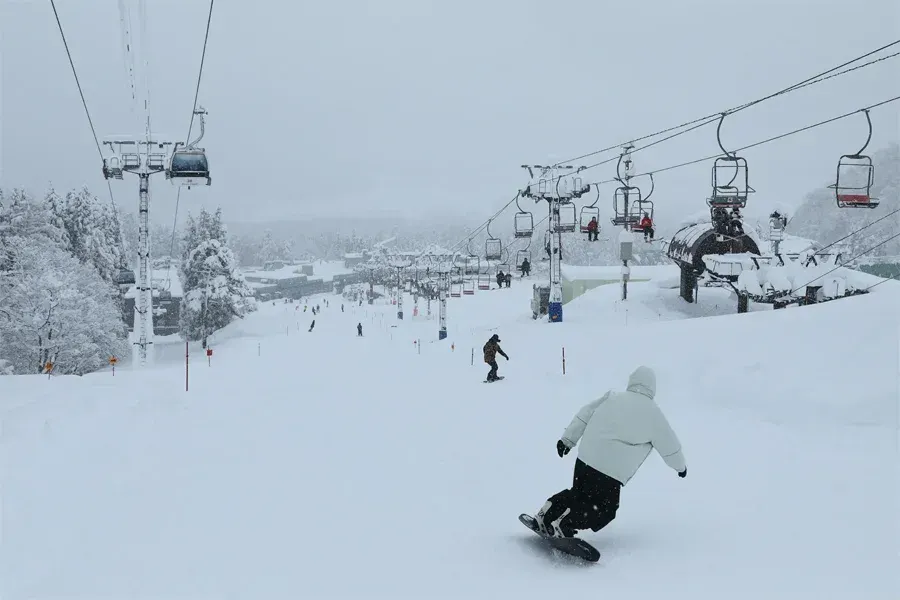
On 21 November, two ski resorts in Japan's Hakuba Valley opened for winter. One had invested in new equipment specifically to guarantee its opening date weeks in advance. The other opened ten days earlier than planned because nature delivered an extraordinary amount of snow. So which resort had made the better commercial decision?
At Able Hakuba Goryu, management had already committed to opening on 21 November after installing two refrigerated snow-production machines at its Toomi base area. The new equipment allows the resort to manufacture snow independently of freezing outside temperatures, giving it greater control over the start of winter. For the first time in Goryu's history, an opening date had been announced before the arrival of sufficient natural snowfall, with the operator explicitly highlighting the advantages for visitors and surrounding tourism businesses.
Neighbouring Hakuba Happo-One took a rather different approach. Originally targeting 1 December, the resort brought its opening forward by ten days following heavy snowfall, reporting 190cm at Usagidaira and 120cm at the gondola base on 21 November. Three lift installations began operating, providing access to two limited skiing routes, while much of the mountain remained closed despite the exceptional early-season conditions.
Both resorts delivered a successful opening, but the contrast creates an interesting question about the economics of ski tourism. If Goryu had invested heavily to secure its opening date, only for substantial natural snowfall to arrive anyway, was the investment necessary? And if Happo-One could open ten days ahead of schedule without making a comparable new investment in refrigerated snow production, what exactly had Goryu purchased?
The answer is not simply more snow. Goryu had purchased the capability to prepare skiing independently of the weather, potentially allowing the resort to make commitments that would otherwise have been much harder to justify. That capability has value even when favourable natural conditions eventually arrive, just as an insurance policy can be valuable despite never generating a claim.
Elsewhere, the same November has produced strikingly different outcomes. Some California resorts have opened earlier than planned following substantial natural snowfall, while Steamboat and Park City have postponed their advertised opening dates because temperatures were unsuitable for conventional snowmaking. In Europe, meanwhile, operators are investing in water reservoirs, more efficient snowmaking systems and contractual guarantees that promise customers a minimum amount of skiing.
The evidence from elsewhere in the world is striking. In Austria, resorts equipped with snowmaking operated for an average of approximately 130 days last winter, compared with fewer than 68 days for those without. Yet research examining 56 French ski-lift operators found no clear evidence that greater investment in snowmaking improved profitability. More reliable skiing, it seems, does not necessarily translate into a better financial return.
The implications extend well beyond the lifts. New Austrian industry research suggests that lift tickets account for less than one-fifth of the spending generated by a typical ski-area visit, while Scandinavian operators are now offering customers minimum-terrain guarantees backed by refunds. There is also a surprising environmental dimension: producing artificial snow can account for a remarkably small proportion of the carbon emissions associated with an international skiing holiday, depending on the technology and electricity supply.
Together, these findings raise questions that matter to resort operators, accommodation businesses and property investors alike. Who actually benefits when a mountain can promise skiing? How much does it cost to provide that certainty, and does the investment protect revenue or simply transfer financial risk from customers to operators? As snowfall becomes less predictable in some mountain destinations, the answers could influence not only how resorts operate, but where investors choose to put their money.
This one goes deeper than the snow.
We've brought together evidence from Japan, Europe and North America for one of our most comprehensive Premium Analyses yet. From the cost of making snow to the billions at stake in winter tourism, we examine who really benefits from reliable skiing, and whether the investment pays off.
Unlock the full investigation and our Premium Analysis archive, with new research delivered straight to your inbox.
Join for US$80 a year. Just one coffee a month to keep yourself informed.