Japan Is Shrinking...So Why Is Brookfield Betting ¥100 Billion On Rental Housing?
Brookfield’s acquisition of around 3,700 rental apartments across Japan’s major cities is a useful reminder that national population decline and strong urban housing demand can exist at the same time.

Japan’s shrinking population would appear, at first glance, to make rental housing an unusual place for one of the world’s largest property investors to make a major new bet.
Brookfield clearly sees it differently. The global investment group has acquired a portfolio of 50 rental apartment buildings containing around 3,700 homes across Greater Tokyo, Greater Osaka, Nagoya and Fukuoka, marking its first major entry into Japan’s multifamily residential sector. Brookfield did not disclose the purchase price, although Nikkei Asia reported that the transaction exceeded ¥100 billion, or roughly US$627 million at the exchange rate used at the time.
The assets are also not distressed or speculative stock. Brookfield says the portfolio is approximately 96% occupied, has an average building age of less than four years and is concentrated in well-connected urban locations. Many of the apartments are compact units serving single-person households, making the portfolio particularly exposed to the way people actually live in Japan’s largest employment centres.
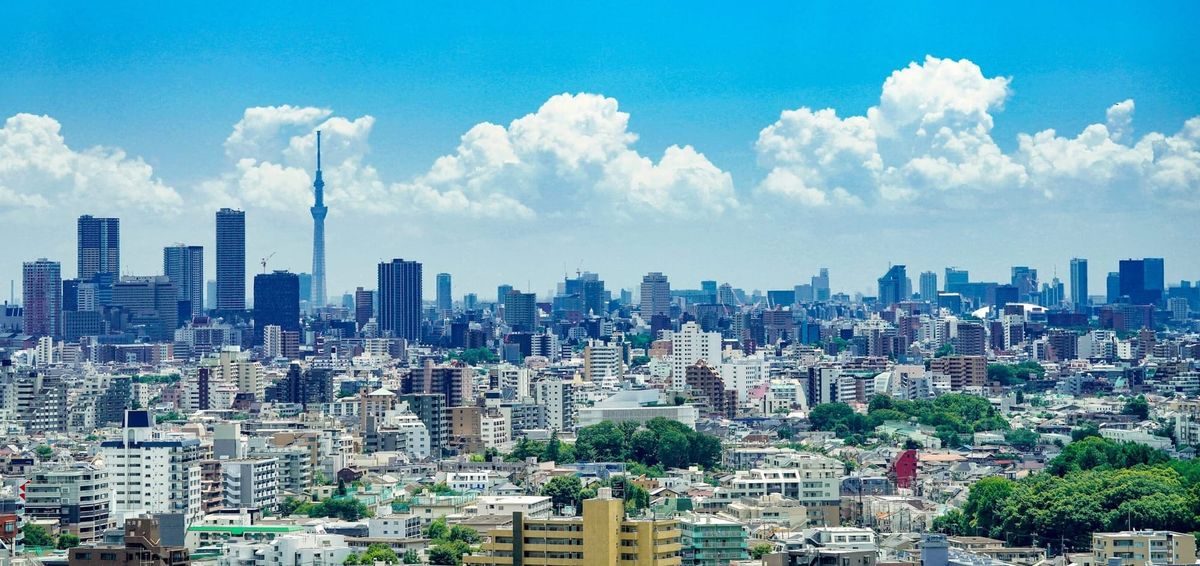
The timing makes the deal especially interesting. Japan’s population continues to decline and the preliminary 2025 census showed a reduction of more than three million people in just five years. Yet around 30% of the country’s population is now concentrated in the Greater Tokyo region alone, illustrating why a falling national population does not translate neatly into falling housing demand everywhere.
Population Is Falling, But Demand Is Concentrating
Brookfield’s own explanation for the investment focuses on three factors: long-term urbanisation, resilient housing demand and constrained new supply.
That combination goes to the heart of an increasingly important distinction in Japanese property. The country can lose population overall while Tokyo, Osaka, Fukuoka and other employment centres continue attracting people from smaller cities and regional areas. A household disappearing in rural Japan does not automatically create an empty apartment in central Tokyo.
Household structure matters as well. Japan has experienced a long-term rise in single-person households, meaning the number of homes required does not necessarily fall at the same speed as the number of people. A portfolio dominated by smaller urban apartments can therefore have very different demographic exposure from large family housing in a declining regional town.
Recent rental data supports that argument. AtHome reported that asking rents for apartments across Greater Tokyo, Nagoya, Kyoto, Osaka, Kobe and Fukuoka were higher year on year across all size categories in June. For apartments of 30 sqm or less in Tokyo’s 23 wards, the average asking rent reached ¥114,242 per month, up 12.4% from a year earlier and setting a record for a 25th consecutive month.
Fukuoka recorded an even larger year-on-year increase in the same small-apartment category, at 15.9%. These are asking-rent figures rather than contracted rents, and part of the increase will reflect inflation, but they hardly suggest a residential market suffering from an immediate shortage of tenants.
New Supply Is Becoming Harder To Produce
The other side of Brookfield’s thesis is supply. Higher land prices, construction inflation and labour shortages have made new housing increasingly expensive to deliver. This does not mean Japan has stopped building apartments, but it can reduce the number of projects that remain commercially viable and push new development towards locations and price points capable of supporting higher costs.
For owners of relatively young existing buildings, constrained replacement supply can be supportive. Brookfield is acquiring a portfolio averaging less than four years old rather than taking on ageing buildings requiring extensive redevelopment, giving it exposure to modern stock without assuming the development risk and construction costs involved in reproducing 3,700 units today.
The 96% occupancy rate provides another clue. Brookfield is not simply betting that demographic trends will eventually produce demand; it is buying buildings where that demand already exists.
This is an important difference when analysing Japan. National demographic projections remain highly relevant, but they become less useful as the geographic lens narrows. The outlook for an apartment beside a major Tokyo railway station is not the same as the outlook for an old house in a municipality losing population and employment simultaneously.
The Same Lesson Appears In Resort Markets
There is an interesting parallel with some of the regional markets Uchi Insights follows. Hokkaido recently fell below five million registered residents for the first time, yet Kutchan, Niseko and Rusutsu all recorded population growth. Kutchan simultaneously faces significant housing pressure because tourism, construction and hospitality employment are creating demand in a part of a prefecture that is shrinking overall.
The scale and economics are completely different from Brookfield’s urban portfolio, but the underlying principle is similar. Property demand follows jobs, access, services and lifestyle rather than a national population curve.
That does not mean demographics can simply be ignored. Locations without a compelling economic reason to attract or retain residents are likely to face increasingly difficult housing fundamentals as Japan shrinks. The gap between successful and struggling markets may actually become wider as population and economic activity concentrate further.
Brookfield’s portfolio illustrates which side of that divide institutional capital currently prefers: relatively new apartments, high occupancy, strong transport access and exposure to the country’s largest economic centres.
Japan Is Becoming More Selective, Not Simply Smaller
The ¥100 billion-plus transaction is also another indication that international investors continue to see opportunity in Japanese real estate despite higher interest rates and a less favourable currency environment than existed only a few months ago.
Brookfield has described multifamily housing as one of Japan’s most compelling real estate sectors and has said it intends to expand the portfolio over time. The company already invests across Japanese offices, infrastructure, energy and other assets, so its decision to establish immediate scale in rental housing is more meaningful than a small exploratory purchase.
For property investors, the broader lesson is not that Japan’s demographic decline is irrelevant. It is that the headline number can obscure where demand is actually moving.
Japan is shrinking, but its population is not disappearing evenly. People continue to concentrate around major employment centres, households are becoming smaller, rents are rising in many cities and expensive construction is restricting the supply of new homes.
Those forces can support rental property even as the national population falls. Brookfield’s investment therefore looks less like a bet against Japan’s demographics than a bet on their uneven consequences. In a country becoming smaller overall, the places where people continue to gather may become more valuable, not less.
Enjoyed this free article? Uchi Insights provides the latest market news from across Japan.
But if you want the latest data, you can access premium Uchi Insights reports covering pricing, sales, supply and market trends across Japan’s leading resort real estate destinations
Everything is available to Uchi Insights Premium subscribers, together with our complete archive of reports and analysis across Japan’s leading resort markets.
Twelve months of Premium access costs US$200—roughly the price of a good pair of gloves for that Japanese powder snow.
If you are buying, selling, investing or simply trying to understand where Japan’s resort property markets are moving, make sure you have the same data and analysis at your fingertips.
Don’t be the one wondering what everyone else knows.
Sources
- Brookfield, announcement of its acquisition of 50 Japanese multifamily assets, 17 August 2026. (kyodonewsprwire.jp)
- Mingtiandi, Brookfield Enters Japan Rental Housing With $627M Portfolio Buy From JP Morgan, 17 August 2026. (mingtiandi.com)
- AtHome, June 2026 rental asking-price survey. (athome.co.jp)
- Statistics Bureau of Japan, preliminary 2025 Population Census results. (stat.go.jp)