Myoko’s Growth Story Is Becoming Bigger Than Tourism
Tower Semiconductor’s planned return to production in Myoko could bring skilled employment and advanced manufacturing back to the city, adding a very different economic driver alongside its emerging tourism investment cycle.

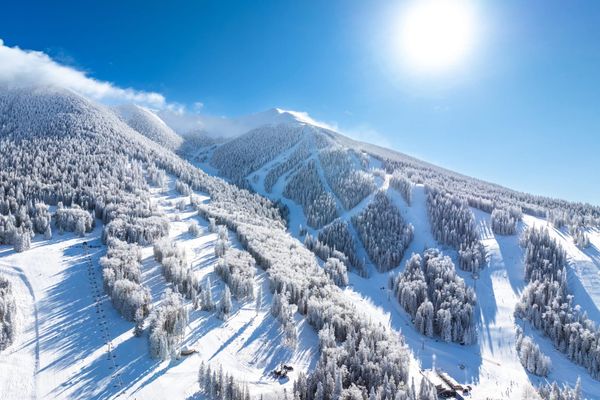
Myoko’s investment story has so far been dominated by tourism. Major resort redevelopment, new international hotel brands, improvements at the ski areas and a push towards year-round visitation have created expectations that Myoko could become one of Japan’s next significant international mountain destinations.
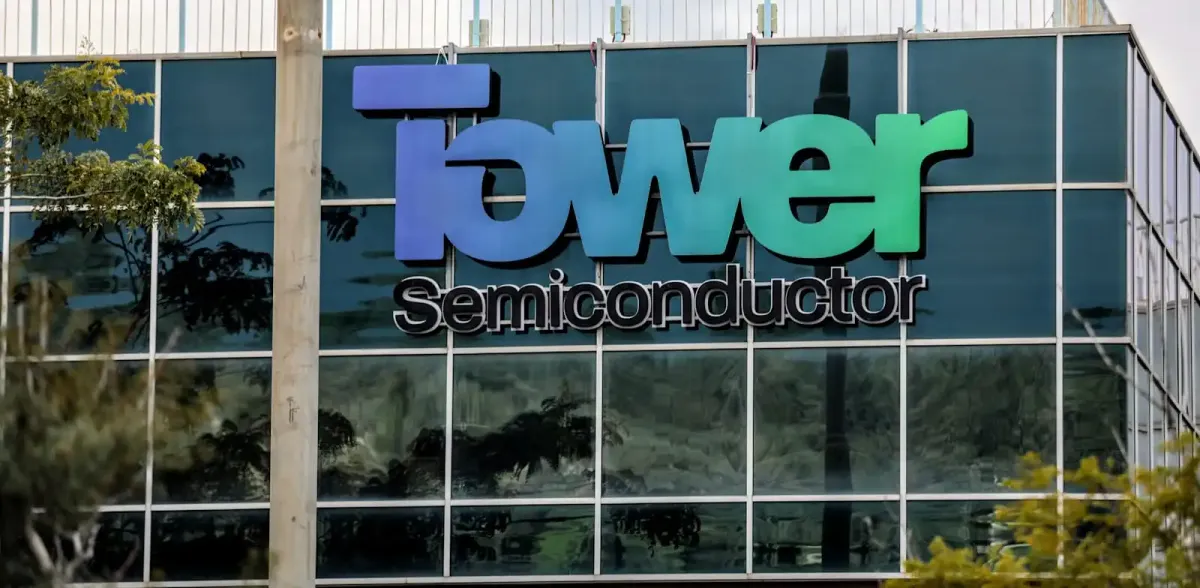
A newly announced semiconductor investment adds something quite different to that picture. Tower Semiconductor plans to restart advanced semiconductor production at its Arai facility in Myoko, bringing manufacturing back to a plant that stopped production in 2022. The project forms part of a much larger expansion across Niigata and Toyama prefectures focused on technologies used in AI data centres, high-speed communications and next-generation optical connectivity.
Japan’s Ministry of Economy, Trade and Industry certified the supply assurance plan in July. According to Patience Realty, METI estimates the wider programme at approximately ¥600 billion, with government support of up to around ¥160 billion. Importantly, that ¥600 billion figure covers the broader expansion across Niigata and Toyama rather than investment in Myoko alone. Tower Semiconductor separately describes its own investment as approximately US$3 billion after around US$1 billion of Japanese government grants.
An Existing Factory Gets A New Purpose
The Myoko element centres on Tower’s Arai facility, formerly known as Fab 6. Manufacturing there ended in July 2022 as part of a restructuring of the company’s Japanese operations, with machinery subsequently sold or transferred.
Tower now plans to repurpose the site for 300mm silicon photonics production and advanced optical packaging. Silicon photonics uses light rather than conventional electrical signals to move very large quantities of data efficiently, an increasingly important technology as AI systems and data centres demand faster connections while trying to control energy consumption.
METI’s schedule anticipates initial supply from Myoko beginning in May 2027, while Tower expects the broader first stage of its Japanese expansion to reach full production readiness during the fourth quarter of that year. The company is also expanding its Fab 7 facility in Uozu, Toyama, with a further factory planned alongside it subject to additional agreements.
The importance for Myoko is not simply the size of the investment. It is the type of economic activity being introduced. Tower has said the expansion should support high-quality engineering and manufacturing employment, local suppliers and partnerships with universities and research institutions. The company has not yet disclosed how many jobs will be created in Myoko, so it would be premature to estimate the effect on population or housing demand, but the employment profile is very different from the seasonal labour traditionally associated with a mountain tourism economy.
A More Diversified Myoko
That distinction is particularly interesting for property investors. One of the questions surrounding Myoko’s recent property-market repricing has been how dependent future growth is on the successful execution of the large tourism investment programme being led by Patience Capital Group.
That remains an important consideration. Six Senses Myoko, the redevelopment of Myoko Suginohara and the wider hospitality and commercial plans have the potential to transform the visitor economy, but major resort projects carry construction, financing and delivery risk.
The semiconductor revival operates on an almost completely different set of economic drivers. Tourism depends on visitor numbers, accommodation demand, weather, travel trends and discretionary spending. Advanced semiconductor manufacturing is driven by technology investment, global demand for computing infrastructure, industrial policy and supply-chain strategy.
Neither industry is immune to economic cycles, but they are not the same cycle. If both develop successfully, Myoko could therefore become more economically diverse than its ski-resort narrative suggests. Tourism can support hotels, restaurants, retail, property management and seasonal employment, while advanced manufacturing can generate engineering jobs, supplier activity and more consistent year-round demand.
What Could It Mean For Property?
The immediate property implications should not be overstated. There is no published figure yet for additional employment at the Arai factory, and a ¥600 billion regional investment programme should not be translated directly into an equivalent boost for Myoko real estate. Much of the spending will take place elsewhere in the wider programme and a significant share will be directed towards specialised manufacturing equipment rather than the local economy.
However, sustained skilled employment can influence a property market in ways that tourism investment does not. Engineers, managers, suppliers and other employees require long-term housing rather than hotel rooms. Companies need offices, logistics and supporting services. Families create demand for schools, shops and everyday infrastructure. If the factory develops into a larger industrial and research cluster, those effects could become more meaningful over time.
This is particularly relevant in a regional Japanese city where population decline has historically been a much bigger structural challenge than excessive housing demand.
The combination also gives Myoko an unusual potential identity. It may be developing simultaneously as an international mountain destination and as part of Japan’s renewed effort to rebuild domestic semiconductor capacity.
That does not automatically make every property in Myoko more valuable, nor does it remove the need to distinguish carefully between Akakura, Arai, Suginohara, Ikenotaira and the other distinct local markets. The tourism investment is concentrated around the mountain areas, while the semiconductor plant sits within the city’s established industrial economy.
But from a broader investment perspective, that separation may actually be the most interesting part. Myoko’s future no longer needs to rest entirely on whether one tourism redevelopment programme succeeds exactly as planned. A second source of capital, employment and regional investment is now emerging from an industry with almost no connection to snow.
For a market that has recently attracted considerable attention because of what it might become, that makes the underlying economic story noticeably more substantial.
Enjoyed this free article? Uchi Insights provides the latest market news from across Japan.
But if you want the latest data, you can access premium Uchi Insights reports covering pricing, sales, supply and market trends across Japan’s leading resort real estate destinations
Everything is available to Uchi Insights Premium subscribers, together with our complete archive of reports and analysis across Japan’s leading resort markets.
Twelve months of Premium access costs US$200—roughly the price of a good pair of gloves for that Japanese powder snow.
If you are buying, selling, investing or simply trying to understand where Japan’s resort property markets are moving, make sure you have the same data and analysis at your fingertips.
Don’t be the one wondering what everyone else knows.
Sources
Patience Realty, Myoko Semiconductor Factory Revival Anchors JPY 600 Billion Investment Plan, July 2026. (patiencerealty.com)
Tower Semiconductor, Tower Semiconductor with METI Support Announces Strategic Capacity Expansion in Japan, 14 July 2026. (towersemi.com)
Japan Ministry of Economy, Trade and Industry semiconductor supply assurance plan, as referenced by Patience Realty.