Japan’s next IR round could reopen a major resort development story
Japan’s decision to reopen integrated resort applications in 2027 is not just a casino policy update—it could restart competition for some of the country’s largest tourism and mixed-use development opportunities.

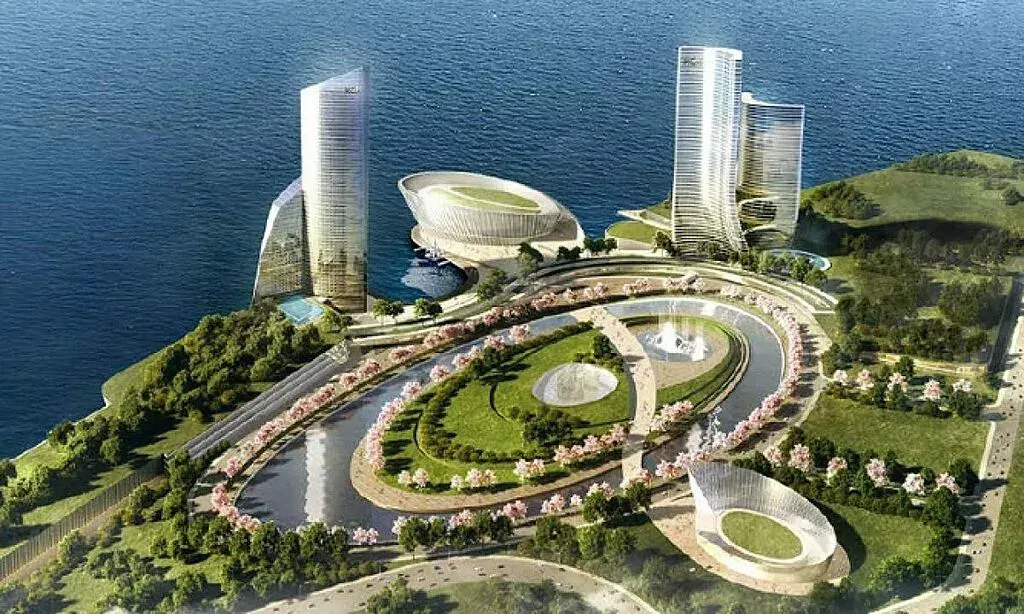
Japan’s decision to reopen applications for new integrated resorts from May to November 2027 may sound like a narrow regulatory update. In reality, it has wider implications for tourism, land use and large-scale resort development across the country.
That is because integrated resorts—or IRs, in Japan’s terminology—were never intended to be only about casinos. The official model is much broader: large tourism complexes combining hotels, conference and exhibition space, entertainment, retail and other visitor infrastructure, with gaming revenue helping support the economics of the wider scheme. For investors, the relevance lies less in the casino licence itself and more in what an approved IR can unlock around it.
Japan’s first round produced only one approved project: Osaka’s MGM-Orix-led scheme on Yumeshima. Since then, the national process has felt paused rather than fully abandoned. The confirmation of a second application window from 6 May to 5 November 2027 changes that. It signals that the government still sees IRs as part of its long-term tourism and economic strategy, even if the rollout has been slower and more selective than many once expected.
That distinction matters. There was a period when Japan’s IR story was framed as a potentially transformative national wave, with multiple regions expected to compete aggressively for licences and foreign capital. Reality has been more measured. Political caution, public opposition, execution complexity and high capital requirements all slowed the market. But a slower rollout does not necessarily mean a weaker one. In some ways, it may produce a more investable landscape.
For investors, the main significance of the 2027 reopening is that it restores optionality.
Up to three IR development plans can be certified under the legislation, and only one has been approved so far. That leaves room for two more. The next round therefore reopens the possibility that additional regions—whether major cities, regional gateways or tourism-focused prefectures—could try again with revised strategies, stronger partners or more realistic expectations. If that happens, the resulting projects would not just affect gaming. They could reshape surrounding hotel markets, transport planning, land values and perceptions of regional growth.
This is where the real estate angle becomes more interesting than the policy headline.
Integrated resorts tend to function as catalysts. Even before a project is built, the possibility of approval can influence land assembly, infrastructure planning, partner selection and investor attention. If a serious local government bid emerges, nearby districts often begin to be re-evaluated through a different lens: not simply as local property markets, but as potential components of a larger visitor economy.
That does not guarantee a positive outcome. In fact, one of the key lessons from Japan’s first IR cycle is that enthusiasm alone is not enough. Bids are expensive, politically sensitive and operationally complex. A local authority may spend years exploring an IR without ever securing approval or delivering a project. From an investment perspective, that means speculative land plays based solely on IR rumour remain risky. The real opportunity usually sits with the places that can demonstrate credible access, political support, tourism logic and a viable operating consortium.
The government’s language around IRs is also revealing. Official tourism policy continues to frame them as tools for improving Japan’s MICE competitiveness, supporting attractive stay-type tourism and encouraging travel flows into different parts of the country. That reinforces the idea that the state still sees IRs as part of a broader destination-development agenda, not just a gambling framework.
For resort and hospitality investors, that should be read carefully.
Japan’s tourism story is already strong, with rising international arrivals, growing inbound spending and continued interest in large-scale visitor infrastructure. Against that backdrop, a revived IR process adds another layer to the country’s development pipeline. It suggests that Japan remains open—selectively—to major mixed-use tourism projects with an international orientation. That is relevant not only to gaming operators, but to hotel groups, retail brands, conference businesses, landowners and real estate investors trying to understand where large pools of capital may flow next.
Still, caution is warranted.
The Osaka project shows that even an approved IR can take time, attract scrutiny and require substantial coordination between government and private capital. Any second-round applicants will face similar hurdles. Funding conditions are tighter than they were a few years ago, construction costs are higher, and local politics remain important. The process may reopen in 2027, but that does not mean Japan is about to see a rush of shovel-ready megaprojects.
It also does not mean every region should want one. Integrated resorts are not neutral developments. They bring questions around social impact, infrastructure burden, local identity and how the gains are distributed. In that sense, the second application window is as much a test of local conviction and governance capacity as it is of private-sector appetite.
For investors, the practical takeaway is straightforward. The 2027 reopening matters because it puts large-scale tourism development back on the map in a formal way. But the real opportunities—if they emerge—will likely be highly local and highly selective. This is not a national rising tide story. It is a framework that could create a small number of outsized location-specific outcomes.
That is why the new IR window deserves attention. Not because Japan is suddenly becoming a broad casino-development market, but because the government is again making room for very large, destination-shaping projects beyond Osaka. If even one more credible bid gains traction, the ripple effects for land, hotels, infrastructure and regional investment narratives could be significant.
In other words, the next IR round is not just about who wins a licence. It is about which places are able to turn a regulatory opening into a believable long-term resort proposition.