What Resort Workforce Housing Costs After the Grant
Sun Peaks discloses the land, grant and debt behind 110 workforce homes. Original calculations test the recurring rent burden and the limits of per-home comparisons.

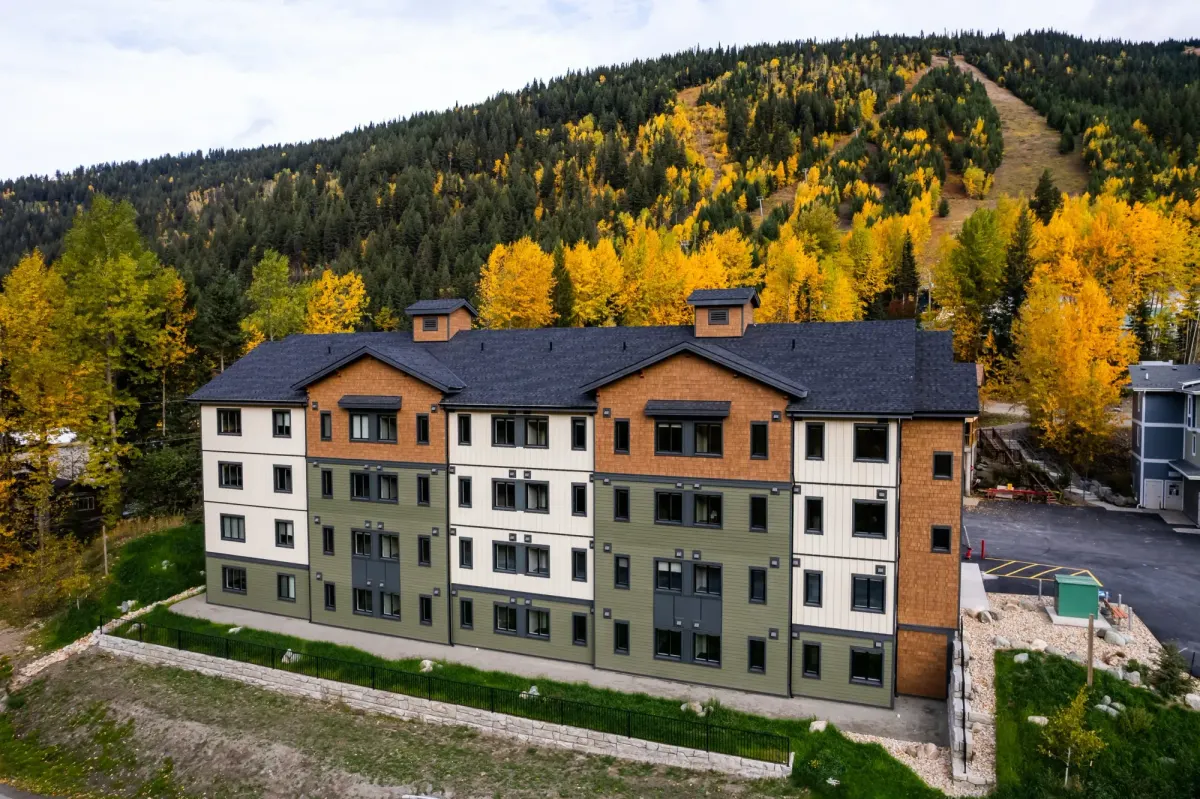
Sun Peaks’ first housing-authority rental development offers an unusually useful view of the money behind mountain workforce accommodation. The municipality’s 25 September update puts Aspen Landing halfway through construction, with 110 homes and a C$54.5 million project budget. It identifies land support and a grant alongside substantial repayable financing. That combination matters because an affordable building still needs enough recurring income to operate and service its debt.
Dividing the disclosed budget by the number of homes gives approximately C$495,000 per unit. This is our calculation from the published project figures, not a construction tender rate or a price at which a home can be bought. More revealingly, the C$37.1 million financing component equates to about C$337,000 per home. Support reduces the capital burden; it does not remove it.
The detailed analysis below separates the disclosed funding components, compares the limits of another British Columbia benchmark and tests how financing cost and occupancy affect a hypothetical rent requirement. It is intended to help resort operators and property owners read housing proposals more critically. The scenarios use explicit assumptions because actual loan terms, final rents and a complete operating budget have not been disclosed in the material reviewed.
Continue with Uchi Insights Premium for the complete article including deep dives into what can make staff accommodation in the resort work for everyone involved.
Membership also includes our report archive and deeper analysis of Japan’s property markets and global mountain destinations.