Greater Tokyo’s Housing Market Is Starting To Split
New detached-home prices have reached another record in Greater Tokyo while comparable existing homes have become cheaper, adding to signs that buyers are becoming more selective as the cost of new housing continues to rise.

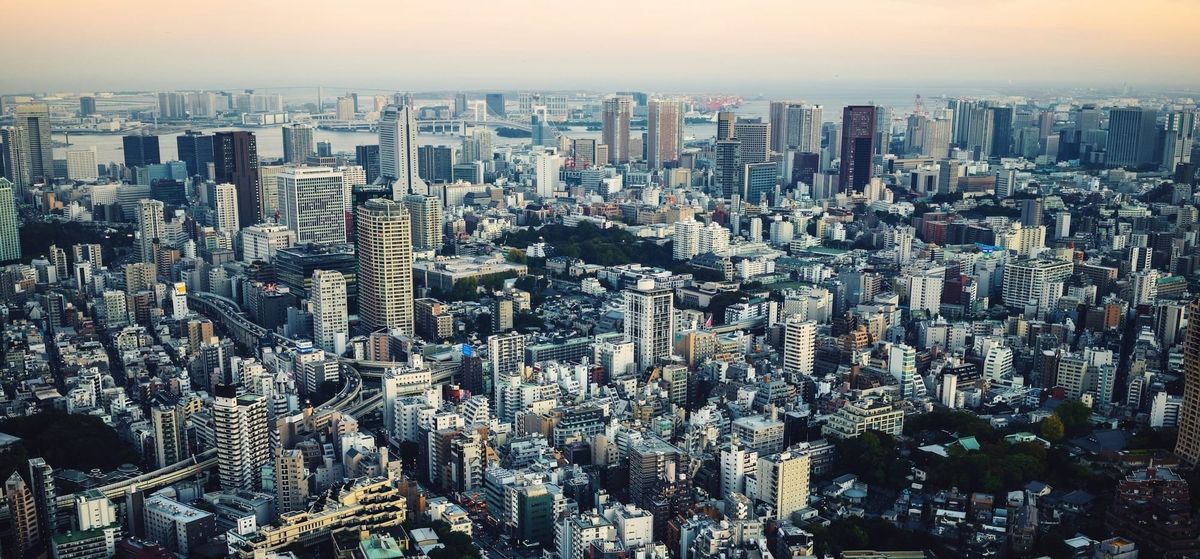
Greater Tokyo’s housing market is producing two very different sets of numbers.
The average price of a new detached wooden house reached ¥52.39 million in July, up 4.4% from June and the highest level recorded since Tokyo Kantei began compiling the data in 2014. Tokyo itself rose 5.8% to a record ¥67.63 million, while Kanagawa also reached a new high at ¥55.71 million.
At almost exactly the same time, Tokyo Kantei reported that the average price of an existing detached house meeting the same basic land, access and ownership criteria had fallen 3.5% to ¥40.94 million, its second consecutive monthly decline. Existing-house prices fell 5.5% in Chiba and 5.3% in Saitama, while Tokyo was broadly flat and Kanagawa edged higher.
One month does not establish a new market cycle, and average prices can move considerably depending on the locations and properties being sold. Even so, the widening difference between new and existing homes is worth watching because it fits a broader pattern emerging across Japanese residential property: creating new housing has become increasingly expensive, while buyers in the secondary market retain more ability to push back on price.
Construction costs are an important part of that equation. Recent industry research has continued to identify labour shortages, higher wages and more expensive equipment work as major sources of construction inflation, while Ministry of Land, Infrastructure, Transport and Tourism material shows residential building costs rising substantially over the past decade. Developers facing those costs cannot necessarily respond to softer demand simply by cutting prices, particularly when land has also become more expensive in many Greater Tokyo locations.
The result is a new-build market that can become more expensive even without uniformly stronger buyer demand. Developers may focus increasingly on locations, specifications and buyer groups capable of absorbing higher prices, while projects that cannot support the required margin become harder to deliver at all. Higher prices can therefore reflect scarcity and replacement cost as much as an uncomplicated boom in demand.
The Resale Market Is Showing More Resistance
The same caution is visible in Greater Tokyo’s existing condominium market, although this is a different property category and should not be treated as a direct comparison with detached houses.
REINS recorded 3,638 existing condominium transactions in July, down 8.6% from a year earlier and the fourth consecutive month of declining sales. The average transaction price slipped 0.7% to ¥52.67 million, while the average price per square metre fell 1.5%. At the same time, new listings increased 5.7% and inventory rose 5.5%.
Those numbers do not suggest a dramatic correction. Prices have softened only modestly, and performance varies considerably across Greater Tokyo. They do suggest that buyers have more choice and are becoming less willing to accept every asking price simply because the broader market has risen.
This creates a more complicated picture than either “Japanese property prices are booming” or “higher rates are bringing prices down”. Both can miss what is happening underneath.
New-build prices can remain under upward pressure because the cost of producing equivalent stock has risen. Existing properties face a different price-setting mechanism, with sellers competing against a larger pool of already-built homes and buyers able to compare age, condition, location and renovation requirements more directly. As affordability becomes stretched, that difference can become increasingly visible.
A More Selective Market, Not Necessarily A Weaker One
There may also be an implication for investors looking beyond Tokyo.
The rising cost of replacement can support the value of good existing property, particularly where the building is well maintained, difficult to reproduce and located in an area with genuine demand. This logic is relevant in Japan’s resort markets too, where construction costs can be even more challenging and the practical difficulty of delivering new supply is often greater.
But replacement cost does not create value on its own. An older house requiring substantial work, a poorly managed apartment building or a property in a weak location does not automatically become attractive because new construction is expensive. Buyers still need to distinguish between existing stock that offers a genuine discount to replacement and stock that is simply cheaper for good reason.
That distinction is becoming more important as Japan moves away from the unusual combination of negligible financing costs and relatively low construction inflation that shaped much of the previous property cycle.
The latest Greater Tokyo figures are therefore less interesting as a prediction that one part of the market will rise while another falls. They show a market becoming more segmented. New stock is expensive to create, secondary buyers are becoming more discriminating, and the price gap between what is newly built and what already exists may continue to influence where value appears.
For buyers, that makes comparison more important than the headline index. The question is increasingly not whether Japanese housing prices are rising or falling, but what exactly is being bought, how difficult it would be to replace and whether the premium for newness is justified.
Enjoyed this free article? Uchi Insights provides the latest market news from across Japan.
But if you want the latest data, you can access premium Uchi Insights reports covering pricing, sales, supply and market trends across Japan’s leading resort real estate destinations
Everything is available to Uchi Insights Premium subscribers, together with our complete archive of reports and analysis across Japan’s leading resort markets.
Twelve months of Premium access costs US$200—roughly the price of a good pair of gloves for that Japanese powder snow.
If you are buying, selling, investing or simply trying to understand where Japan’s resort property markets are moving, make sure you have the same data and analysis at your fingertips.
Don’t be the one wondering what everyone else knows.
Sources
Tokyo Kantei, July 2026 new detached-house price survey, as reported by R.E.port.
Tokyo Kantei, July 2026 existing detached-house price survey, as reported by R.E.port.
East Japan Real Estate Information Network, July 2026 Greater Tokyo resale-market data.
Ministry of Land, Infrastructure, Transport and Tourism and recent industry research on construction costs.