Big Sky’s New Teacher Homes Put Resort Housing in a Wider Context
Big Sky has opened six homes for school staff. The project highlights why a resort’s housing strategy needs to consider the wider year-round community.

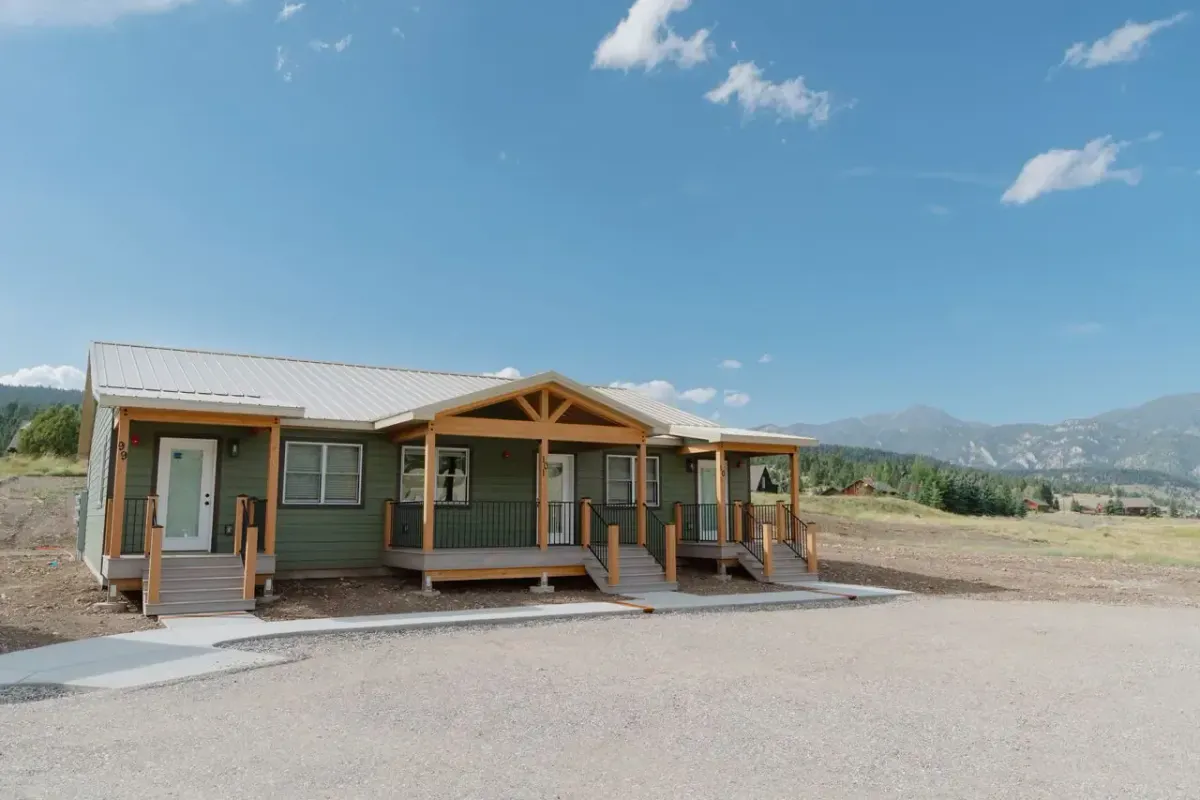
Six small homes in Big Sky offer a useful counterpoint to the larger development announcements that tend to define mountain property news. The Montana school district opened the accommodation for teachers and support staff on 16 September, addressing a part of resort life that is easy to overlook when housing discussions concentrate on seasonal tourism workers.
SnowBrains reported on 22 September that the six one-bedroom homes, each approximately 600 square feet, had been completed on the school campus and were already occupied. The school board set monthly rents between US$750 and US$1,200. The project forms a second phase of staff accommodation, rather than a new residential resort or a scheme for holiday letting.
According to the report, the Yellowstone Club Community Foundation and Big Sky Resort Area District each contributed US$375,000 towards construction. Those contributions should not be confused with a verified total development cost: the reporting does not establish an all-in figure covering land and infrastructure. Separately, the district’s August funding update sets its wider grant programme within a budget that also provides for infrastructure, reserves and essential government services.
The significance lies in who the homes are intended to keep in the community. A resort can accommodate its own employees and still depend on a school struggling to retain staff. For a household considering a permanent move, confidence in local education may carry more weight than an additional visitor attraction. Housing for essential workers therefore belongs in a discussion about the viability of year-round mountain towns.
This is not evidence that six homes will materially change Big Sky’s wider housing market. Their direct reach is limited, and the published information does not yet demonstrate a long-term improvement in staff retention. It does show a completed intervention with a defined group of occupants. That makes future assessment more useful than a general promise to improve affordability.
Japanese resort communities can draw a planning question from the example without assuming that the same funding structure would transfer. When new accommodation is proposed, whose housing needs are included in the discussion? A workforce plan focused entirely on hotel staff may omit people providing the services on which those staff and their families rely. The answer requires local evidence about shortages, not an imported target for housing numbers.
For mountain property investors, that wider community picture can inform a more realistic view of a destination’s durability. It cannot be reduced to a guaranteed premium on a nearby home. Schools and the people who run them are part of the everyday foundations of a place, and Big Sky’s latest project makes one of those dependencies unusually visible.
We hope you enjoyed this free article. Uchi Insights provides the latest market news from across Japan as well as global mountain resorts, most of it for free.
But we'd love a little love!
If you want the latest data and deep-dive reports, you can access premium Uchi Insights covering pricing, sales, supply and market trends across Japan’s leading resort real estate destinations.
Twelve months of Premium access costs US$200—roughly the price of a good pair of gloves for that Japanese powder snow.
If you are buying, selling, investing or simply trying to understand where Japan’s resort property markets are moving, make sure you have the same data and analysis at your fingertips.
Don’t be the one wondering what everyone else knows.
Sources
- SnowBrains: Six School Staff Homes Opened on 16 September; Report Published 22 September 2026
- Big Sky Resort Area District: FY27 Grant Funding Framework, 25 August 2026