A Nagano Hotel Turns an Unused Chapel Into Ski Rental Space
An unused hotel chapel is being repurposed for winter equipment. The practical property story is the adaptation of existing space, with transport still to be arranged.

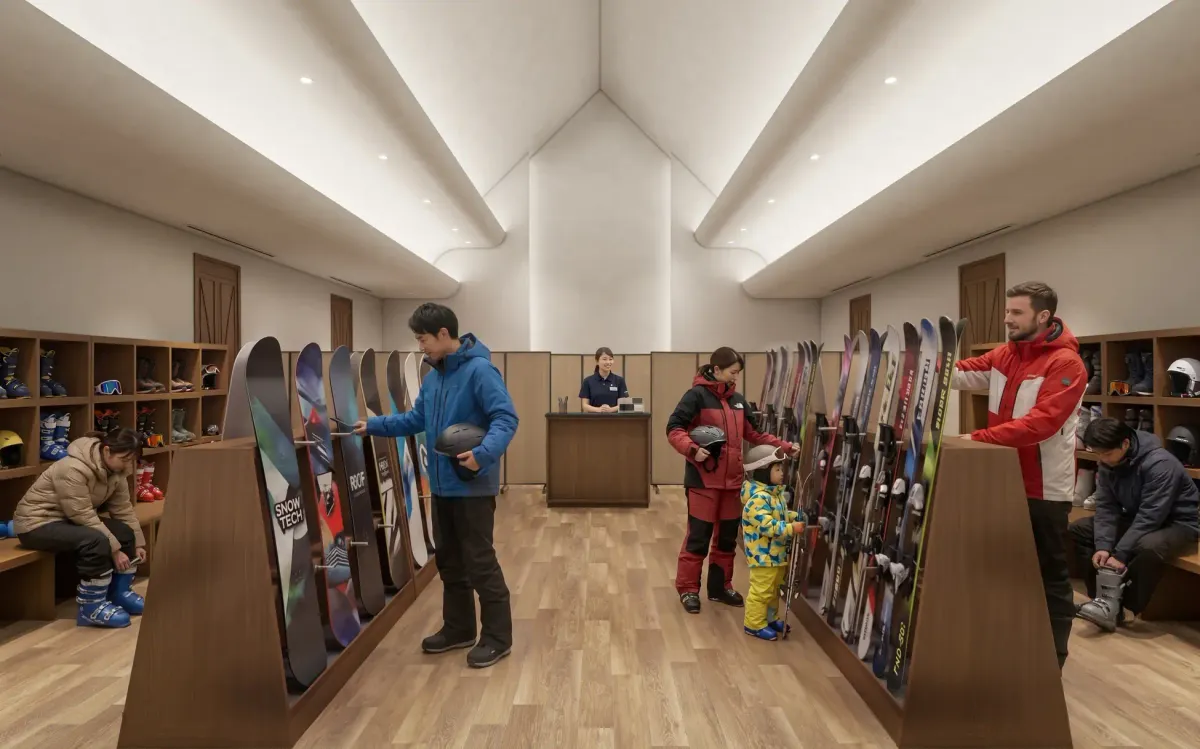
In Japan’s Nagano city, Mercure Nagano Matsushiro is converting an unused chapel into a winter rental and equipment-storage facility. The hotel’s 6 November announcement sets out a planned 15 December opening, with ski and snowboard equipment, clothing and facilities for drying and storage. It is a small example of adapting existing hospitality space to a different guest use.
The location is important. This is a hotel near the Nagano interchange, rather than accommodation at the foot of a ski lift. The operator presents it as a base for visiting several mountain areas, including Hakuba and Shiga Kogen. That positioning should not be read as evidence that those destinations are equally close, or that guests can reach them without arranging suitable transport.
The conversion addresses a practical issue for a touring ski holiday. Guests staying outside a resort still need somewhere to collect equipment, prepare for the following morning and dry what they have used. Bringing those functions into the accommodation can simplify the stay, particularly where a party plans to visit more than one ski area rather than remain at a single mountain.
For the property itself, the relevant development is the reuse of a space whose previous function no longer justified keeping it idle. The announcement does not provide the conversion cost, rental revenue forecast or an assessment of alternative uses. It therefore cannot establish a financial return. It does show a decision to align an existing part of the building with the hotel’s intended winter customer.
That is a useful distinction for hotel owners considering similar changes. An attractive room can remain commercially unproductive if it is poorly matched to current demand, while a less visually prominent facility can remove a recurring inconvenience for guests. The case for a conversion should depend on that specific use, the cost of providing it and the effect on the rest of the building.
Transport remains part of the proposition. A hotel shuttle from a railway station is not automatically a shuttle to ski resorts, and a rental counter does not resolve the journey to the mountain. Guest information should set out those arrangements separately so that the convenience of collecting equipment is not mistaken for a complete ski package.
For visitors who want both mountain days and time elsewhere in Nagano, the facility could make a city-edge base easier to use. For those prioritising immediate access to a particular ski area, it offers a different compromise. The development is worth watching as an example of operational adaptation: the most useful outcome would be an existing building serving its winter guests more effectively, without requiring an expansion in room numbers.
Follow the mountains beyond the snowfall. Unlock the Premium Analysis archive, with new premium articles delivered straight to your inbox.
Join for US$80 a year–roughly a coffee a month to keep yourself informed.