Why Aspen Is Spending US$42 Million on a Ski Resort Restaurant
Aspen’s US$42 million restaurant redevelopment reveals how dining, lessons and reliable mountain access can strengthen the value of an entire ski holiday.

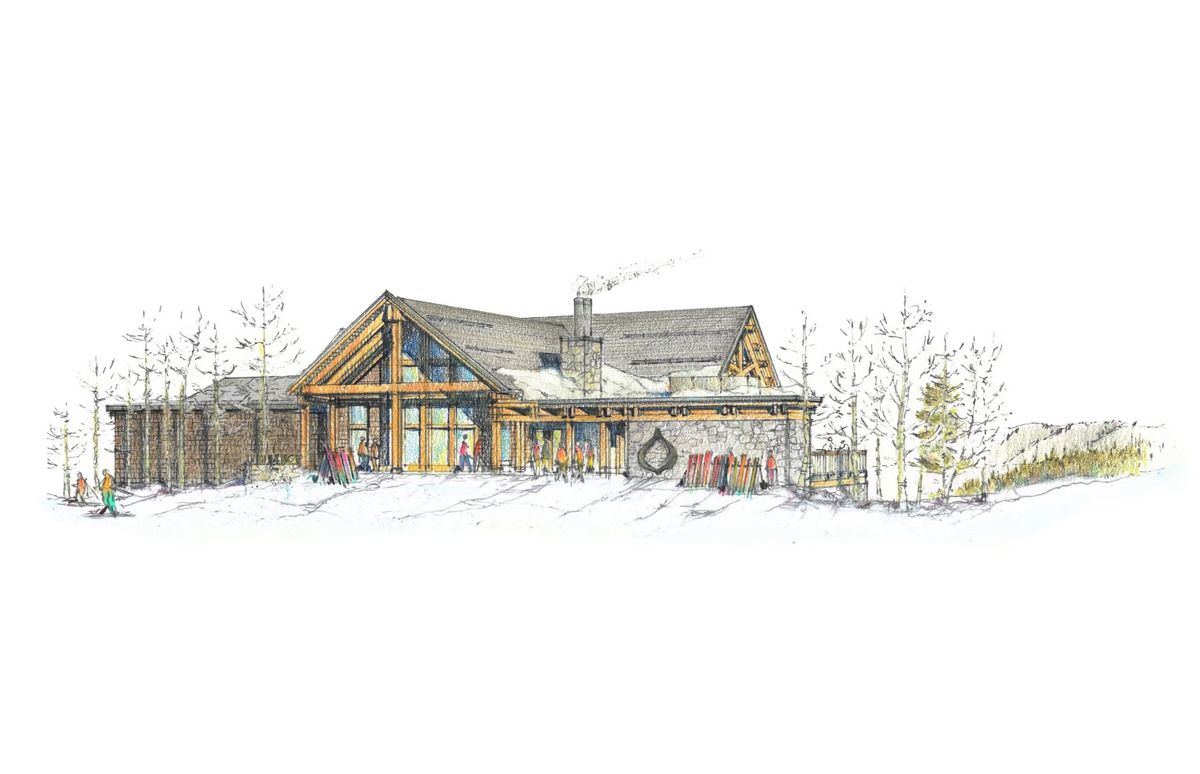
A mountain restaurant reveals how resort operators think about guest spending, repeat visits and the property businesses around their slopes.
US$42 million is a substantial investment in somewhere to stop for lunch. At Snowmass in Colorado, United States, Aspen One is preparing to reopen Ullrhof after a redevelopment that turns the mountain restaurant into a much larger hospitality operation.
The replacement spans 26,000 square feet, accommodates more than 600 guests and brings together four dining concepts, from quick refreshments to a bar and outdoor grill. Those specifications were already being promoted by Ikon Pass in September, ahead of Aspen’s latest winter announcement.
The obvious question is why a ski business would put so much capital into a restaurant. The answer starts with what a mountain actually sells. Skiing brings people there, but the commercial experience includes getting equipment, taking lessons, finding lunch, meeting friends and deciding whether the whole holiday was good enough to repeat.
A restaurant can influence several of those decisions. Its value to a resort may therefore extend beyond its own till receipts.
More Lunches Without More Skiers
The simplest commercial case for a larger mountain restaurant is that it can serve customers who are already there. If existing facilities are full at lunchtime, some guests may abandon a purchase, eat elsewhere or head down the mountain earlier than intended. Additional capacity could convert that unmet demand into sales without requiring another skier through the lift gates.
However, seats are only one part of the equation. Kitchens, ordering systems, payment points and staffing determine how quickly people can be served. A bigger dining room attached to an overwhelmed kitchen simply gives more customers somewhere to wait.
Ullrhof’s different formats offer another possible advantage. A quick coffee, a family lunch and a longer drink need different service arrangements. Serving them separately could spread demand across the day and accommodate different budgets and preferences.
The comparison also needs to be made against a realistic alternative. Aspen’s April 2025 announcement described a complete replacement of a 56-year-old building, within a broader programme of nearly US$80 million. Some spending therefore addresses the renewal of an existing facility, rather than buying entirely additional earning capacity.
The relevant investment question is how a larger, redesigned operation compares with retaining, repairing or replacing the old restaurant on a smaller scale. Aspen has not published the project-level revenue, operating profit or return assumptions needed to answer that conclusively. Nor should a healthy margin on an individual drink be confused with the profitability of an entire building. Labour, supplies, maintenance, utilities and the capital invested all matter. There is also a distinction between new spending and relocated spending. If customers simply move from another Aspen-operated restaurant to Ullrhof, the group’s revenue gain will be smaller than Ullrhof’s sales suggest.
A Bigger Business Than Lift Tickets
Public accounts from Vail Resorts provide useful context. In the year to July 2026, Vail’s Mountain segment generated approximately US$222.5 million from dining, US$278.1 million from ski school and US$282.8 million from retail and rental. Together, those categories represented about 31% of Mountain revenue, according to our calculation from its financial disclosures.
Lift revenue still accounted for approximately 58%. These are revenue shares, not profit margins, and Vail’s portfolio is not a direct financial proxy for Aspen. They nevertheless show that the businesses surrounding lift access are substantial.
There is an important complication: these activities often depend on the same visitor. Vail’s Mountain dining revenue fell approximately 7.6% in FY2026, calculated from its published figures. Its results attributed the wider revenue weakness principally to unfavourable weather affecting visits. Selling meals alongside lift tickets broadens the sources of income, but does not necessarily diversify away the risk of a poor ski season.
Aspen’s approach is best understood as making more of the destination experience commercially valuable, while continuing to invest in the skiing that supports it.
The Beginner’s Second Visit
The same logic helps explain Aspen’s three-day first-time lesson package. Announced in September, it combines instruction, lift access and rental equipment. Completing the programme qualifies participants for further complimentary skiing and rental access during the season; the latest announcement specifies availability conditions.
Giving away subsequent access might appear counterintuitive. But a first lesson and a lasting customer are different outcomes. The National Ski Areas Association identifies beginner conversion as a longstanding industry challenge. Its historical overview describes conversion remaining around 19% before the pandemic-era participation increase. That is historical context, rather than a current Aspen retention rate, but it explains why operators care about what happens after the first attempt.
Aspen’s package removes two costs from the decision to return after completing the programme. For someone who has started to gain confidence, that could make another visit easier to justify. The potential reward extends beyond another lesson. A returning participant may bring family, book accommodation or become a future passholder. Equally, providing instruction and equipment has costs, and some participants will not return.
There is no disclosed evidence here that beginners are more profitable than experienced skiers. The stronger interpretation is that Aspen is investing in the opportunity to develop customers over time, rather than seeking the maximum possible lift revenue from every early visit.
Reliability Protects the Whole Day
Other parts of Aspen’s programme address the conditions needed for those purchases to happen. The Nell Bell chairlift replaces two older lifts with a high-speed quad connecting the town base to Bell Mountain. Construction was already included in Aspen’s June announcement. It is principally an access and equipment-renewal project, rather than an expansion into a new mountain.
The October update also reports additional snowmaking pipelines, guns and pumping improvements. These target coverage, capacity and efficiency. Better snowmaking can support more dependable trading, but still requires suitable weather and water availability.
At Elk Camp, battery backup adds a different form of resilience. In a company-hosted interview, Aspen’s sustainability chief described storage of nearly 1,900 kilowatt-hours, sufficient for an estimated two to three hours of lift operation. That offers a bounded period of backup, rather than unlimited protection against an outage.
Aspen also says Holy Cross Energy will use stored power outside operating hours to help manage grid demand. The commercial arrangements and net savings have not been disclosed, so an environmental benefit should not automatically be presented as a proven reduction in operating costs.
The financial rationale can nevertheless extend beyond energy bills. Keeping a lift operating protects access to the facilities and experiences around it. Reliability can preserve existing revenue even when it attracts no additional visitors. This is not unique to Aspen. Vail’s proposed Park City investments include both greater lift capacity and a Crescent Lift retrofit explicitly intended to reduce downtime. Replacement, expansion and reliability spending solve different commercial problems.
Where Mountain Operations Meet Property
Aspen One’s structure makes the connection with hospitality particularly interesting. Aspen Skiing Company operates the mountains and associated businesses, including instruction, rental and mountain dining. Aspen Hospitality is a separate division covering hotels, private clubs and branded residential properties, including the Nell and Limelight brands. The group does not own the entire surrounding destination.
Common ownership can make it easier to coordinate products and recognise benefits across a holiday. An improvement that produces a modest direct return on the mountain might also strengthen the appeal of a related hotel or encourage repeat bookings.
That is a potential organisational advantage, not evidence that any particular Aspen project meets its investment target. Integration also brings capital demands and disruption. The Little Nell is due to begin a comprehensive refurbishment in April 2027, with its October update indicating a closure extending into early summer 2028. Maintaining a premium destination requires periodic reinvestment in accommodation as well as mountain facilities.
For surrounding property owners, better access, convenient dining and dependable operations can improve the experience of staying in a resort. Those improvements may support demand and willingness to return. They do not, on their own, establish higher rental income or residential values.
The implications for Japanese destinations such as Niseko and Hakuba are therefore about coordination as much as ownership. Where the developer, accommodation manager and ski-area operator are separate businesses, the organisation paying for an improvement may capture only part of its benefit. Joint packages, coordinated transport, compatible opening hours and shared investment priorities can help connect those businesses. Buying every part of the destination is not the only route to a more coherent holiday.
Aspen’s US$42 million restaurant puts a familiar property question in an unusually visible setting: how much of an investment’s value is earned inside the building, and how much comes from making the surrounding destination work better?
When Ullrhof opens, the revealing measures will be the customers served, the spending that is genuinely additional and the experience that brings people back. The number of seats is only the starting point.
Follow the mountains beyond the snowfall. Unlock the Premium Analysis archive, with new premium articles delivered straight to your inbox.
Join for US$80 a year–roughly a coffee a month to keep yourself informed.